
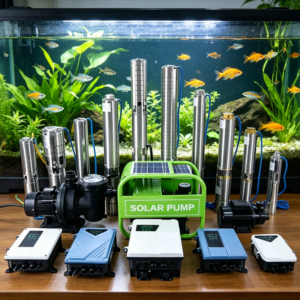
Choosing among a 0.5 HP, 1 HP, and 2 HP solar water pump can make a significant difference in your water supply, electricity costs, and overall system performance. Whether you need water for your home, borehole, livestock, garden, or farm irrigation, selecting the correct pump size is essential for reliable water delivery.
Many buyers searching for the best solar water pump in Kenya assume that a higher horsepower rating automatically means more water and better performance. However, an experienced technician will tell you that horsepower is only one part of the equation. Water output also depends on pumping height, water levels, pipe diameter, pump design, solar panel capacity, and available sunlight.
Understanding these differences can help you make an informed purchasing decision and avoid spending money on a pump that does not meet your actual requirements.
This guide compares 0.5 HP, 1 HP, and 2 HP solar water pumps, explains their practical applications, and shows you how to choose the right solar water pumping system for your needs.
Understanding Solar Water Pump Horsepower
Before comparing different solar water pump sizes, it is important to understand what horsepower means and how it relates to pump performance.
Horsepower (HP) measures mechanical power. One horsepower is approximately 746 watts of mechanical power. However, this does not mean that a 1HP solar water pump necessarily consumes exactly 746 watts of electricity. Motor efficiency, pump design, and operating conditions affect actual electrical consumption.
A solar water pump converts electrical energy from solar panels into mechanical energy that moves water from a well, borehole, river, or storage tank to its destination.
Generally, a higher-powered pump can handle more demanding pumping conditions. Nevertheless, the amount of water delivered depends on the pump’s performance curve and the total resistance it encounters.
For example, a 0.5 HP pump moving water a short distance into a low-level tank may perform satisfactorily, whereas a similar pump attempting to raise water from a deep borehole may deliver very little water or fail to meet the required duty.
The most important consideration is therefore matching the pump’s capabilities to your water source and intended application.
0.5HP vs. 1HP vs. 2HP Solar Water Pump: Quick Comparison
The following table provides a preliminary guide to the three pump sizes. These are general application examples, not guaranteed performance specifications for every model.
| Feature | 0.5HP Solar Pump | 1HP Solar Pump | 2HP Solar Pump |
| Relative power | Low | Medium | High |
| Typical applications | Small gardens and light domestic use | Homes, small farms, and tank filling | Higher-demand homes, farms, and irrigation |
| Water demand | Low | Moderate | Moderate to high |
| Pumping challenges | Best suited to compatible, less demanding pumping duties | Handles more demanding duties when correctly selected | Can handle higher pumping duties when the pump curve permits |
| Solar array requirements | Generally lower | Generally higher | Generally highest |
| Initial equipment cost | Usually lowest | Usually moderate | Usually highest |
| Best selection method | Match flow rate and total pumping head to your needs | Match flow rate and total pumping head to your needs | Match flow rate and total pumping head to your needs |
Actual suitability depends on the particular pump model, total dynamic head, water-source yield, and solar system specifications. A 2HP pump is not automatically suitable for every deep borehole, and a 0.5HP pump may be perfectly adequate for a carefully selected application.
0.5HP Solar Water Pump: Best for Smaller Water Requirements
A 0.5 HP solar water pump is worth considering when your daily water demand is relatively low, and the pumping conditions fall within the pump’s operating range.
Because it generally requires less power than larger alternatives, it may be an economical starting point for smaller installations. However, its suitability depends on whether it can deliver the required water volume at the necessary pumping head.
Where can you use a 0.5HP solar water pump?
A suitably specified 0.5HP solar water pump may be appropriate for:
– Filling a small domestic water storage tank.
– Watering a home garden or small vegetable plot.
– Supplying water to a small livestock watering point.
– Moving water between nearby storage tanks.
– Pumping from a compatible shallow well or surface-water source.
For instance, a household that needs to transfer water from a nearby source to a storage tank may not need the additional power of a 2 HP pump.
However, the same household may require a larger or different pump if the water must travel uphill, pass through long, narrow pipes, or be lifted from a deep borehole.
Advantages of a 0.5HP solar pump
The main attraction is affordability. A smaller pump can reduce the initial equipment investment and may require a smaller solar array than a larger pump of comparable design.
It can also be a sensible option where water demand is modest, and pumping can take place during daylight hours.
When should you avoid using a 0.5 HP pump?
Do not choose a 0.5HP solar water pump simply because it is cheaper. If you need to supply several households, irrigate a large farm, or lift water against a substantial head, the pump may not deliver enough water within your available pumping hours.
Technician’s advice: Confirm the required litres per day and the total pumping head before purchasing. A smaller pump that cannot meet your daily water requirement may ultimately cost more in lost productivity and additional equipment.
1HP Solar Water Pump: A Practical Middle Ground
A 1HP solar water pump can be a useful middle-ground option for households and small agricultural applications that require more capacity than a smaller pump can provide.
Nevertheless, the 1HP label alone does not establish how deep the pump can operate or how much water it can deliver. Different models have different impeller designs, motor characteristics, and hydraulic performance curves.
What is a 1HP solar water pump suitable for?
Depending on its specifications, a 1HP pump may be suitable for:
– Filling domestic water storage tanks.
– Supplying water to homes with moderate daily demand.
– Pumping from suitable boreholes or wells.
– Watering small farms and gardens.
– Supporting livestock watering systems.
– Transferring water to elevated storage tanks.
For example, a small farm may need water for household use, livestock, and a limited area for irrigation. A correctly selected 1HP solar pump could meet these requirements if its flow rate, head capacity, and operating hours are sufficient.
However, if the borehole has a low sustainable yield, even a 1HP pump may be too powerful for the available water supply. Pump selection must account for the water source, not just the intended destination.
Why choose a 1HP solar water pump?
The principal advantage is flexibility. Depending on the model, it may provide a useful balance between equipment cost, water output, and power requirements.
For buyers comparing solar water pump prices in Kenya, the 1HP category is worth investigating when a small pump seems inadequate, but a larger installation may be unnecessary.
What should you check before buying?
Confirm the pump’s rated flow at your calculated total dynamic head, its required solar input, controller compatibility, and protection features.
If you intend to use the pump for a borehole, obtain the pumping-test information where available. This helps establish how much water the borehole can sustainably supply.
Technician’s advice: Do not assume that every 1 HP solar borehole pump can handle the same depth. Compare the manufacturer’s pump curves and confirm the expected output at your actual operating conditions.
2HP Solar Water Pump: For Higher Water Demand and More Demanding Duties
A 2HP solar water pump may be appropriate when your water requirements are greater, or your installation presents more demanding pumping conditions. It generally needs a more substantial power supply than a comparable smaller pump.
However, selecting a 2HP model does not automatically guarantee higher flow at every depth. The specific pump must be designed to operate at the required head and flow rate.
Where can you use a 2HP solar water pump?
Depending on the model and installation, potential applications include:
– Irrigating larger gardens and small-to-medium agricultural plots.
– Supplying water to larger households or several water-use points.
– Filling storage tanks where daily water demand is high.
– Supplying livestock watering systems with substantial demand.
– Pumping from suitable boreholes with higher head requirements.
For agricultural applications, the required water volume depends on the crop, irrigated area, irrigation method, soil conditions, and season.
A 2HP solar pump may be useful where a smaller pump cannot deliver the necessary daily volume within the available sunlight hours. However, a technician must still confirm the pump’s output at the actual total dynamic head.
Advantages of a 2HP solar pump
A suitably selected 2HP system can provide greater pumping capability and may help meet higher water demands.
It can be particularly useful where the pump must operate for several hours each day to fill storage tanks or support planned irrigation.
What are the disadvantages?
The initial equipment cost may be higher, and the system may require a larger solar array, an appropriately rated controller, suitable cables, and compatible electrical protection.
If the pump is oversized for the water source, it may draw down a borehole too quickly, operate outside its intended range, or waste money on unnecessary capacity.
Technician’s advice: Choose a 2HP pump when the calculated duty requires it, not simply because you want the most powerful pump available.
How to Choose the Right Solar Water Pump: The Technical Factors That Matter
Although horsepower provides a useful starting point, reliable sizing of solar water pumps requires several additional measurements. These determine whether a pump can deliver the right amount of water under real operating conditions.
1. Calculate Your Daily Water Requirement
Start by estimating how much water you need each day. A household, a livestock farm, and an irrigation project have different consumption patterns.
For example, if your installation requires 3,000 litres daily and you expect five useful pumping hours, the average delivery rate needed during those hours is:
3,000 litres ÷ 5 hours = 600 litres per hour.
This is a planning calculation, not a guarantee that the pump will deliver 600 litres per hour. The selected pump must achieve that flow at the required head, and actual solar pumping hours and output vary with conditions.
For irrigation, also consider peak demand and whether you will irrigate directly or fill a storage tank first.
2. Understand Total Dynamic Head (TDH)
Total dynamic head is one of the most important considerations when selecting a solar water pump. It describes the overall head that the pump must overcome to move water through the system.
It includes:
– Pumping water level: The water level in a well or borehole while pumping.
– Delivery elevation: The vertical height to the tank or discharge point.
– Pipe friction: Resistance created by pipes, bends, valves, and fittings.
– Required pressure: Additional head needed when water must be delivered under pressure.
Suppose water is being pumped from a borehole with a dynamic water level 35 meters below ground into a tank whose inlet is 10 meters above ground level. If estimated pipe and fitting losses are 5 meters, the approximate total dynamic head is:
35 + 10 + 5 = 50 metres.
The pump must be able to deliver your required flow at approximately 50 meters of head.
Notice that the example uses the pumping water level rather than simply the total drilled depth. This distinction is important because the water level can be substantially higher than the bottom of the borehole.
3. Check the Pump’s Flow Rate at the Required Head
Manufacturers publish pump performance curves showing how flow changes with pumping head. These curves are more useful than relying on the maximum flow or maximum head printed on a product listing.
A pump’s maximum flow is typically achieved under relatively low-head conditions, while its maximum head is generally associated with little or no useful discharge. You should not expect the maximum flow and maximum head to be achieved simultaneously.
Ask your supplier for the expected litres per hour at your calculated total dynamic head.
4. Match the Solar Panels and Controller to the Pump
Solar water pumps depend on an appropriately designed electrical system. The required solar array depends on the pump’s electrical input, motor and controller specifications, expected operating conditions and daily water target.
Do not select solar panel wattage from horsepower alone. Follow the manufacturer’s recommended array configuration, voltage, and current limits.
The controller should be compatible with the pump motor and include appropriate protection where supported, such as overload, overvoltage, and dry-run protection.
A qualified installer should verify electrical compatibility, cable sizing, earthing, and protection before commissioning the system.
5. Consider Water-Source Yield and Storage
A borehole cannot sustainably supply more water than its source can provide. Pumping too aggressively can cause excessive drawdown and interrupt water delivery.
Check the borehole’s tested yield and recovery characteristics, where available, before selecting the pump.
Water storage also makes a difference. An adequately sized tank can store water pumped during sunny hours for use in the evening or during periods of low sunlight. For many applications, storing water is more practical than adding batteries solely to run the pump after sunset.
Common Mistakes to Avoid When Buying a Solar Water Pump in Kenya
Even a quality pump can disappoint if it is incorrectly selected or installed. Avoid these common mistakes when comparing solar water pumps in Kenya.
Choosing by horsepower alone: A higher HP rating does not guarantee the required flow at your operating head.
Ignoring pipe diameter: Narrow pipes and long pipe runs can create substantial friction losses, reducing the water delivered.
Buying an incompatible solar array: Insufficient or incorrectly configured panels may prevent the pump from operating at its intended performance.
Ignoring borehole yield: A pump that removes water faster than the source can replenish it can cause supply interruptions.
Overlooking protection and installation: Incorrect wiring, poor connections, inadequate protection, and improper installation can lead to premature equipment failure.
Focusing only on the purchase price: Compare the complete system requirements, including panels, controller, cables, piping, installation, and maintenance.
Frequently Asked Questions
1. Is a 0.5HP solar water pump enough for a home?
It may be enough for a home with modest water needs if the pump can deliver the required flow at the required head. Homes with high consumption or deep water sources may need a different size or pump design.
2. Is a 1HP solar water pump suitable for a borehole?
Some 1HP models are designed for borehole applications. Suitability depends on the pumping water level, required flow, total dynamic head, borehole yield, and the manufacturer’s specifications.
3. Is a 2HP solar water pump better than a 1HP pump?
Not necessarily. A 2HP pump may be better for a higher-demand application, but a correctly sized 1HP pump may be more economical and effective for a smaller requirement.
4. How many litres can a solar water pump deliver per hour?
There is no single answer for all 0.5 HP, 1 HP, or 2 HP pumps. Output depends on the specific model, pumping head, available solar power, and operating conditions. Request the manufacturer’s performance curve for an accurate estimate.
5. Do solar water pumps need batteries?
Many solar water pumping systems can operate without batteries during daylight hours. A storage tank can hold water for later use. Batteries may be appropriate for particular applications, but they add cost and require their own sizing and maintenance considerations.
6. How do I know which solar water pump to buy in Kenya?
Calculate your daily water demand, establish the water level and delivery elevation, account for pipe losses, and compare the pump curves at the required head. Then, verify solar panel and controller compatibility.
Final Verdict: Which Solar Water Pump Should You Choose?
The right choice among a 0.5 HP, 1 HP, and 2 HP solar water pump depends on your water demand, pumping head, water source capacity, and available solar power.
A 0.5 HP pump may suit smaller applications; a 1 HP pump may provide a practical balance for moderate demand; and a 2 HP pump may be suitable for more demanding duties. These are starting points rather than fixed rules; the pump’s technical specifications should determine the final selection.
Before making your purchase, compare the required flow rate, total dynamic head, solar input, and installation requirements. This will help you avoid unnecessary costs and select a system that performs reliably.
Looking for Solar Water Pumps in Kenya? Choose MK Homestyles
At MK Homestyles, we understand the importance of choosing the right equipment for your water supply needs. Whether you are comparing a 0.5 HP solar water pump for domestic use, a 1 HP solar pump for a small farm, or a 2 HP solar water pump for higher water demand, begin with the specifications that best match your application.
Explore MK Homestyles Kenya for solar water pumps, solar power solutions, and other practical energy products for homes, farms, and businesses
Not sure which pump is right for you? Contact MK Homestyles with your water source, pumping water level, tank height, daily water requirement, and intended application so you can compare suitable options before buying.