-1771628551.png)
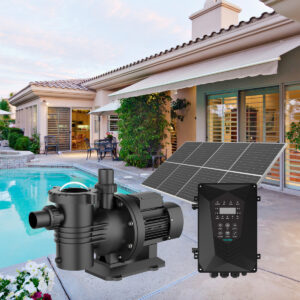
You need a solar water pump for your home, farm, borehole, or irrigation system, but you are stuck between an AC solar pump and a DC solar pump. One installer recommends DC, another recommends AC, and product specifications can make the decision even more confusing.
The good news is that you do not have to choose based on the pump’s horsepower or price alone. The better pump is the one that matches your water demand, pumping head, available solar power, installation conditions, and whether you need grid or generator backup.
Quick answer: Is AC or DC better for solar pumping?
For many small to medium off-grid applications, a DC solar water pump is an attractive choice because solar panels naturally produce DC electricity, allowing a suitably designed DC pump system to avoid the DC-to-AC conversion stage.
For larger water pumping applications, existing AC installations or systems that require greater compatibility with conventional electrical equipment, an AC solar pump can be the better option. AC pumps can be powered from solar through an inverter and can also be convenient where grid or generator backup is required.
The U.S. Department of Energy describes both configurations: a PV array can be connected directly to a DC motor or connected through an inverter to an AC motor. It also notes that AC motors can be useful for higher-power applications, while DC systems can be attractive because PV panels naturally supply DC power. Hence, there is no universal winner between AC and DC solar pumps. The correct choice depends on the application.
What Is a Solar Water Pump?
Before comparing AC and DC technology, it helps to understand how a solar water pumping system works. This provides the technical foundation needed to choose the right pump rather than simply selecting the cheapest or most powerful model.
A solar water pump uses electricity generated by solar panels to move water from a source such as a borehole, well, river, tank, or reservoir to where the water is needed.
A typical solar water pumping system may include:
- Solar panels
- Solar water pump
- Pump controller
- Inverter, where required
- Pipes and fittings
- Mounting structures
- Water storage tank
- Electrical protection equipment
Some systems also use batteries, although batteries are not necessarily required for water pumping. In many applications, it can be more practical to pump water during sunlight hours and store the water in a tank for use later. The Department of Energy identifies PV array, motor, and pump as the basic elements of a PV-powered water system and notes that batteries or water storage can be used for energy storage.
AC vs DC Solar Pumps: What Is the Difference?
The main difference between these two pump types is the type of electrical power used by the motor. Understanding this distinction makes it easier to determine which technology fits your solar water pumping system.
How Does a DC Solar Pump Work?
A DC solar water pump uses a motor designed to operate using direct current. Since solar panels naturally produce DC electricity, the system can be relatively straightforward when the panel voltage and pump requirements are properly matched.
Depending on the model, a controller may be installed between the solar panels and the pump. Modern controllers can help regulate the electrical supply and optimize pump operation as solar conditions change.
The basic arrangement is:
Solar panels → Controller → DC pump → Water delivery system
This makes DC technology particularly attractive for remote and off-grid applications where the pump is intended to operate primarily from solar energy.
How Does an AC Solar Pump Work?
An AC solar water pump uses an alternating-current motor. Because solar panels generate DC electricity, the system normally requires an inverter or suitable solar pump drive to convert and control the electrical supply.
The basic arrangement is:
Solar panels → Inverter/solar pump drive → AC pump → Water delivery system
The additional conversion equipment can increase system complexity and introduce additional losses, but AC pumps offer important advantages in some applications.
They can be particularly useful where:
- Higher pumping capacity is required.
- Standard AC pumps are already installed.
- Grid electricity is available as backup.
- A generator may be used as an alternative power source.
- The project requires conventional AC motor technology.
The Department of Energy notes that AC motors combined with DC-to-AC inverters can be used for high-power applications, while direct DC systems can be simpler for suitable PV-powered loads.
AC vs DC Solar Pump Efficiency
Efficiency is one of the first things buyers consider when comparing AC and DC solar pumps. However, simply saying that “DC is more efficient” is not enough because the complete pumping system determines real-world performance.
A DC system can have an efficiency advantage because solar panels already produce DC power, reducing the need for conversion from DC to AC and back into useful motor operation.
However, efficiency also depends on:
- Pump design
- Motor efficiency
- Controller efficiency
- Inverter efficiency
- Operating head
- Flow rate
- Pipe losses
- Solar irradiance
- Pump operating point
- Correct system sizing
The Department of Energy notes that AC systems can introduce inverter costs and energy losses, but also points out that improved-efficiency AC models are available.
Therefore, don’t choose a pump based solely on whether it is AC or DC. Compare the complete wire-to-water system.
Advantages of DC Solar Pumps
DC technology has become popular for solar water pumping because it works naturally with the electricity produced by photovoltaic panels. This makes it particularly useful in applications where simplicity and off-grid operation are important.
1. Good compatibility with solar panels
Solar panels generate DC electricity, making DC pumps a natural match for photovoltaic systems.
2. Potentially fewer conversion losses
A suitably designed DC system can avoid the DC-to-AC conversion required by a conventional AC pump.
3. Suitable for off-grid applications
DC solar pumps are useful where grid electricity is unavailable or unreliable.
4. Simple system architecture
A properly matched system can require fewer major electrical components than an AC system.
5. Useful for small and medium water requirements
DC pumps are available in a wide range of capacities for domestic water supply, irrigation, livestock watering, and water transfer.
MK Homestyles currently lists DC solar pumps for applications including boreholes, shallow wells, irrigation, livestock watering, and home water systems.
Disadvantages of DC Solar Pumps
Although DC pumps have many advantages, they are not automatically the best solution for every installation. Understanding their limitations prevents buyers from choosing a pump that cannot meet their requirements.
Potential disadvantages include:
- Some models are available only in specific voltage ranges.
- Larger-capacity options may be less readily available than AC equipment.
- Compatibility between panels, controller,r, and pump is critical.
- Replacement components must match the system.
- Direct solar operation varies with available sunlight.
- Some systems may require additional equipment for specific operating conditions.
A DC pump must therefore be properly matched to the solar array and operating requirements.
Advantages of AC Solar Pumps
AC pumps remain an important option for solar water pumping, particularly where conventional electrical infrastructure or higher-capacity equipment is involved.
1. Wide availability
AC motors and pumps are widely used in conventional water systems, making them familiar to many technicians.
2. Suitable for larger systems
AC technology can be attractive for higher-power applications, especially when paired with an appropriate solar inverter or variable-frequency drive.
3. Easier integration with backup power
An AC pumping system can be convenient where the same pump needs to operate from solar, grid electricity, or a generator, provided the electrical system is correctly designed.
4. Existing AC pump infrastructure can be reused
If a property already has a suitable AC pump, converting the power source to solar may be more practical than replacing the entire pump.
5. Flexible applications
AC solar pump systems can be used in agricultural, commercial, and larger water supply installations.
Disadvantages of AC Solar Pumps
AC solar pumping also has some disadvantages that should be considered before installation. These mainly relate to conversion equipment, cost, and system complexity.
Potential disadvantages include:
- An inverter or solar pump drive is normally required.
- Additional conversion equipment introduces some energy loss.
- Installation can be more complex.
- The inverter adds another component that must be correctly sized and protected.
- Initial system costs can be higher in some applications.
This does not make AC pumps a poor choice. It simply means that the entire system needs to be designed around the pump and the intended source of power.
AC vs DC Solar Pumps for Boreholes
Borehole pumping presents a different challenge because the pump must overcome significant vertical head as well as friction losses in the pipework. This makes correct pump sizing more important than simply choosing AC or DC.
For a borehole application, consider:
- Dynamic water level
- Borehole depth
- Required daily water volume
- Desired flow rate
- Total dynamic head
- Pipe diameter
- Pipe length
- Storage tank height
- Solar resource
- Available electrical power
A pump’s maximum head should not be confused with its normal operating performance. A pump may have a high maximum head but deliver substantially less water at that head.
For deep boreholes, pump selection should therefore be based on the pump curve and actual system requirements—not horsepower alone.
AC vs DC Solar Pumps for Irrigation
Irrigation is another major application where the choice between AC and DC depends on the scale and design of the farm.
A small greenhouse, garden, or drip irrigation system may be well-suited to a DC solar pump, particularly when the water source is relatively accessible and the daily water requirement is moderate.
Larger agricultural systems may benefit from AC pumping technology when higher flow rates, longer operating periods, existing electrical infrastructure, or backup power are required.
The important question is not simply:
“Is AC or DC better?”
Instead, ask: “How much water do I need, from what source, to what destination, and at what pressure?”
Once these figures are known, the appropriate pump technology becomes much easier to identify.
How to Choose Between AC and DC Solar Pumps
Choosing a solar pump becomes much easier when you follow a structured assessment instead of comparing brands and prices first.
Step 1: Calculate Your Daily Water Requirement
Start by determining how many litres of water you need each day.
Consider:
- Household consumption
- Livestock
- Irrigation
- Cleaning
- Commercial use
- Water storage requirements
For irrigation, calculate the water requirement based on the crops, irrigation method, and area.
Step 2: Determine the Total Head
Next, determine how far the pump needs to move water vertically and account for pressure and pipe friction.
The relevant figure is the Total Dynamic Head (TDH) rather than simply the physical depth of the borehole.
Step 3: Determine the Required Flow Rate
Work out how quickly you need the water delivered.
For example, pumping a 5,000-liter tank within two hours requires a substantially different flow rate from filling the same tank over six hours.
Step 4: Decide Whether You Need Backup Power
If the pump must operate from both solar and grid electricity or a generator, an AC system may offer useful flexibility.
If the pump will primarily operate from solar during daylight hours, a DC system may provide a simpler solution.
Step 5: Size the Solar Panels Correctly
Do not assume that a pump marked “1HP” can be connected to any collection of solar panels.
The solar array must match:
- Pump voltage
- Pump power
- Controller requirements
- Available solar irradiation
- Required daily pumping volume
- Operating conditions
Incorrect PV sizing can result in poor water output, frequent shutdowns, or inefficient operation.
Step 6: Compare the Complete System Cost
Compare more than the pump’s purchase price.
Consider:
- Pump
- Solar panels
- Controller
- Inverter, if required
- Mounting
- Wiring
- Protection devices
- Pipes
- Installation
- Maintenance
- Replacement components
This gives you the true cost of the solar water pumping system.
Common Mistakes When Buying a Solar Water Pump
Many solar pumping problems begin before installation. Buyers often focus on price or horsepower and overlook the technical information that determines actual water delivery.
Mistake 1: Choosing by horsepower alone
A 1HP pump is not automatically suitable simply because another 1HP pump worked somewhere else.
Mistake 2: Ignoring total head
A pump must be selected according to the pressure and elevation it needs to overcome.
Mistake 3: Buying oversized solar panels without proper system design
More panels do not automatically solve an incorrectly sized pump system.
Mistake 4: Ignoring pipe losses
Long or undersized pipes can significantly affect water delivery.
Mistake 5: Choosing AC or DC before calculating water demand
The pump technology should follow the application requirements—not the other way around.
Mistake 6: Forgetting water storage
In many solar pumping applications, a tank can store pumped water so that the water remains available after sunlight levels fall.
The U.S. Department of Energy notes that water storage can serve as a practical way to store the useful output of PV-powered pumping systems.
When Do You Need a Qualified Solar Pump Technician?
Solar water pumping systems combine hydraulics, electrical equipment, and solar generation. If the installation is large or technically complicated, professional sizing and installation are strongly recommended.
You should involve a qualified technician when:
- Installing a deep-borehole pump.
- Designing a large irrigation system.
- Selecting an AC pump and inverter.
- Calculating Total Dynamic Head.
- Designing a high-power solar array.
- Connecting the grid, generator, and solar power.
- Troubleshooting repeated pump failures.
- Installing electrical protection equipment.
- Replacing an existing pump with a solar system.
A technician can assess the water source, measure or verify the pumping requirements, check electrical compatibility, and recommend an appropriate pump/controller/solar combination.
Which Is Better: AC or DC Solar Pump?
After considering efficiency, cost, installation, and applications, the answer becomes straightforward.
Choose a DC solar pump when:
- You want an off-grid solar pumping system.
- Your water requirements are small to moderate.
- Direct solar operation is suitable.
- You want a relatively simple system.
- You want to minimize unnecessary power conversion.
- Your pump and solar array can be correctly matched.
Choose an AC solar pump when:
- You need a higher-capacity pumping solution.
- You already have suitable AC pump infrastructure.
- Grid or generator backup is important.
- You need compatibility with conventional AC equipment.
- The system is large or commercially oriented.
Ultimately, the best solar water pump is the one that delivers the required water volume at the required head using a properly sized and reliable power system.
Best DC Solar Pump Option for Smaller Water Systems
For buyers looking for a practical DC solution, the right product depends on the required flow rate and head rather than simply the pump’s advertised power.
For example, the SolarMax 24V DC Water Pump available from MK Homestyles offers up to 4,000 litres per hour and up to 50 meters maximum head. It is positioned for applications including elevated tanks, farms, irrigation, and off-grid water transfer.
For deeper borehole applications, MK Homestyles also offers DC submersible models. One example is the Doyin 0.55HP submersible DC solar water pump, rated at 400W with a stated maximum head of 55 metres and maximum flow of 60 litres per minute. Actual output depends on the installation and operating conditions.
The key point is to match the product to your actual head and flow requirements before purchasing.
Frequently Asked Questions About AC vs DC Solar Pumps
These questions address the issues most buyers encounter when comparing solar pump technologies and can also help you determine what type of system suits your project.
Is a DC solar pump more efficient than an AC solar pump?
A DC system can reduce conversion losses because solar panels produce DC electricity. However, actual system efficiency depends on the motor, controller, pump, operating point, inverter, where applicable, and hydraulic conditions.
Which is better for a borehole: AC or DC?
Either can work. DC can be excellent for appropriately sized off-grid borehole systems, while AC may be preferable for larger installations or where grid/generator backup and conventional AC equipment are important.
Which is better for irrigation?
For small and medium irrigation systems, DC solar pumps can be a practical choice. Larger agricultural irrigation systems may benefit from AC pumps depending on flow, head, power requirements, and backup options.
Do AC solar pumps need an inverter?
In a conventional solar PV setup, yes. Solar panels produce DC, while a conventional AC pump requires AC power, so an inverter or appropriate solar pump drive is generally required.
Do DC solar pumps need an inverter?
Not necessarily. A suitably designed DC solar pump can operate from compatible DC solar power through its appropriate controller. However, the exact electrical requirements depend on the pump model.
Can a solar water pump work without batteries?
Yes. Many solar water pumping systems operate during sunlight hours without batteries. Water can then be stored in a tank for use when the pump is not operating.
How do I know what size solar pump I need?
Start with your daily water demand, required flow rate, total dynamic head, water source, pipework, and available solar resource. The pump and solar array should then be sized as a complete system.
Is a more powerful solar pump always better?
No. An oversized pump can increase system cost and may not operate efficiently under the required conditions. Proper sizing is more important than simply choosing the highest horsepower.
Final Verdict: AC or DC Solar Pump?
The AC vs DC solar pump debate does not have a single answer.
DC solar pumps are often an excellent choice for simple, off-grid, and small-to-medium solar water pumping systems, particularly when the pump can be appropriately matched to the solar array.
AC solar pumps can be a better choice for larger systems, conventional AC infrastructure, and applications requiring grid or generator backup.
The most important factors remain water demand, flow rate, total dynamic head, pump performance, solar availability, system efficiency, installation cost, and long-term maintenance.
If you are unsure which option is appropriate, don’t buy a pump based only on horsepower or price. Have the complete water pumping system assessed first.
Get the Right Solar Water Pump in Kenya from MK Homestyles
Choosing between an AC and DC solar pump is easier when you have access to the right products and technical guidance. MK Homestyles supplies solar water pumping solutions for homes, farms, irrigation systems, boreholes, livestock watering, and other water-supply applications in Kenya.
Whether you need a DC solar water pump, solar borehole pump, solar irrigation pump, surface pump, or a complete solar water pumping solution, explore the range available from MK Homestyles Kenya.
If you’re planning a new borehole, irrigation project, or off-grid water supply system, contact MK Homestyles for help selecting a solar water pump that matches your required flow, head, and application.