-1771628551.png)
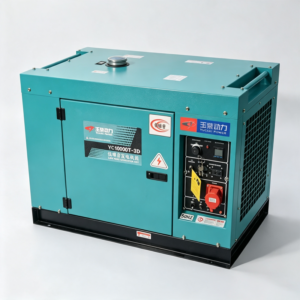
Choosing the right generator for your home is not simply a matter of finding the biggest generator you can afford. A generator that is too small may overload, struggle to start motor-driven appliances, or shut down when several appliances are operating simultaneously. An unnecessarily large generator can cost more to purchase and may operate inefficiently under light loads.
For Kenyan homeowners looking for reliable home backup power, the right approach is first to understand your home’s electrical requirements and then match the generator’s capacity, fuel type, technology, and safety features to those requirements.
Whether you are looking for a portable, petrol, diesel, inverter, or standby generator, this guide explains how to make the right choice from a technician’s perspective.
Why Choosing the Correct Generator Size Matters
Before comparing generator brands, prices, and fuel types, the most important question is: How much power does your home actually need?
Generator capacity is normally expressed in watts (W), kilowatts (kW), or, for some generator specifications, kilovolt-amperes (kVA). One kilowatt equals 1,000 watts.
However, generator sizing is more complicated than simply adding the wattage printed on your appliances. Motor-driven equipment such as refrigerators, freezers, water pumps, and air conditioners can require considerably more electricity to start than when running. Cummins specifically recommends accounting for both running and starting power when sizing a home generator.
This is one of the most common mistakes homeowners make when buying a generator: they calculate normal running watts but forget starting watts.
Step 1: Identify Which Appliances You Actually Need During an Outage
The first step in choosing a home backup generator is to decide what you genuinely need to run during a power outage.
You do not necessarily need a generator capable of powering every appliance in your house simultaneously. In many homes, the most practical approach is to prioritize essential loads.
Make a list such as:
– LED lights
– Television
– Wi-Fi router
– Phone chargers
– Refrigerator
– Freezer
– Computer
– Washing machine
– Water pump
– Microwave
– Electric cooker
– Air conditioner
– Security system
– CCTV cameras
Once the list is complete, divide the appliances into essential and non-essential loads.
For example, during a blackout, you may consider your refrigerator, lights, Wi-Fi, television, and security system essential, while switching off an electric oven, water heater, or air conditioner.
This approach can significantly reduce the generator size you need.
Professional generator sizing guidance also recommends identifying which loads actually need to operate together rather than automatically sizing a generator for every appliance in the house.
Step 2: Calculate the Running Watts
Once you know which appliances need backup power, the next step is to calculate their normal electricity consumption.
Look for the appliance’s rating label or manufacturer’s manual. The power requirement may be shown in watts, amps, or volt-amperes.
If the appliance provides voltage and current rather than watts, a basic electrical calculation is:
Watts = Volts × Amps
For example, an appliance operating at 240 volts and drawing 5 amps would have an approximate apparent power requirement of 1,200 VA.
For generator sizing, however, you should rely on the manufacturer’s specified electrical ratings where available, especially for motor-driven equipment.
Now add the running watts of the appliances you expect to operate simultaneously.
For example, an illustrative essential-load list might look like this:
Appliance| Approximate Running Load
Refrigerator| 250W
Television| 100W
LED lights| 100W
Wi-Fi router| 20W
Laptop| 80W
Freezer| 300W
Total| 850W
These numbers are only an illustration. Actual appliance consumption varies considerably, so always check the manufacturer’s specifications.
Step 3: Don’t Forget Starting Watts
Running watts tell you how much power an appliance needs while it is operating. Starting watts, also called surge or starting power, describe the additional power that may be required when certain equipment starts.
This is particularly important for appliances containing motors or compressors.
Common examples include:
– Refrigerators
– Freezers
– Water pumps
– Air conditioners
– Washing machines
– Some power tools
Motor-driven appliances can require significantly more power during startup, and the generator sizing must account for this starting demand.
Imagine a refrigerator that normally consumes 300W but requires substantially more power for a short period when its compressor starts. If your generator is operating close to its maximum capacity, that starting surge could cause an overload or voltage problem.
The correct generator, therefore, needs sufficient continuous/running power as well as sufficient peak/surge power.
This is why the statement “I only need a 2,000W generator because my appliances add up to 2,000W” may be technically incomplete.
Step 4: Understand kW, kVA, Running Watts, and Peak Watts
Generator specifications can be confusing because manufacturers may use multiple power ratings.
Running watts refer to the power the generator can continuously supply.
Starting or peak watts refer to the higher short-term output required to start certain loads.
Kilowatts (kW) are a measure of real power.
Kilovolt-amperes (kVA) represent apparent power and are commonly used when specifying larger generators.
Power factor becomes relevant when converting between kW and kVA. For equipment where the relationship is important, a qualified technician should confirm the manufacturer’s ratings rather than relying on a simple assumption.
The important buying principle is straightforward: Do not compare generators based on a single number alone.
Check the continuous/rated output, maximum output, voltage, frequency, and the generator’s ability to handle your starting loads.
Step 5: Choose the Correct Generator Capacity
After calculating your running and starting requirements, you can determine the approximate generator capacity required.
As a practical approach, add the running power of the loads you want to operate and account for the largest relevant starting load. Experts recommend leaving additional capacity for safety and potential future needs rather than selecting a generator that operates at its limit continuously.
For example, if your essential appliances require approximately 2,000W while running and one motor-driven appliance creates a substantial startup requirement, a generator rated at exactly 2,000W may be inadequate.
You would instead look for a generator whose Continuous/running output exceeds your normal load and whose Peak/surge output can accommodate the required starting power.
Avoid deliberately buying a generator that is barely large enough.
A reasonable reserve helps accommodate appliance cycling, startup demands, and future additions to your electrical load.
Step 6: Decide Between a Petrol and Diesel Generator
Once you know the required generator capacity, the next decision is fuel type.
For many Kenyan homes, petrol generators are popular because smaller petrol units are widely available and are often suitable for occasional backup use.
Diesel generators become particularly attractive for heavier-duty applications and more frequent or prolonged operation.
The choice should consider:
– Generator size
– Expected operating hours
– Fuel availability
– Fuel consumption
– Purchase price
– Maintenance
– Noise
– Spare parts
– Expected lifespan
– Load requirements
For a homeowner who only experiences occasional short outages, a compact petrol generator may be practical.
For a larger home, farm, business, or property that requires frequent extended backup power, a diesel generator may be worth considering.
There is no single fuel type that is automatically the best for every home.
Step 7: Consider an Inverter Generator for Sensitive Electronics
If your backup load includes computers, televisions, networking equipment, gaming systems, and other sensitive electronic devices, generator power quality deserves special attention.
An inverter generator uses electronic power-conversion technology to produce a controlled electrical output. Many inverter generators are also designed to operate more quietly and efficiently than comparable conventional portable generators, although the exact performance depends on the model and load.
This makes inverter generators particularly attractive for homes where the primary backup loads are electronics and smaller appliances.
However, don’t assume that every inverter generator is automatically suitable for every appliance. Always verify the generator’s voltage, frequency, rated output, and manufacturer specifications.
For larger whole-house backup requirements, a professionally installed standby generator may be more appropriate.
Step 8: Think About Fuel Consumption and Generator Running Costs
The purchase price is only the beginning of the cost of owning a generator.
Every hour the generator runs can involve:
– Fuel consumption
– Engine oil
– Filters
– Routine servicing
– Repairs
– Battery maintenance on electric-start models
– Replacement parts
This is why generator fuel consumption should be one of the most important factors to consider when buying.
A generator that costs less initially but consumes significantly more fuel may become more expensive over several years.
When comparing generators, ask the seller for the manufacturer’s fuel consumption data at different load levels.
Remember that fuel consumption generally changes with load. A generator operating under heavy load will typically consume more fuel than one operating under light load.
For homeowners who frequently use backup power, this difference can have a meaningful impact on the total cost of ownership.
Step 9: Consider Generator Noise Before Buying
Generator noise is often underestimated until the machine is actually operating next to a home.
A conventional generator can produce considerable engine and exhaust noise, which can become particularly noticeable at night.
When comparing models, check the manufacturer’s stated noise level in decibels (dB) and find out under what operating conditions that measurement was taken.
For residential environments, particularly apartments and closely spaced neighborhoods, a quiet generator or inverter generator may be preferable.
Don’t simply choose the model advertised as “silent.” No combustion generator is literally silent. Look for an actual noise specification and consider where the generator will be installed.
Step 10: Check the Generator’s Safety Features
Generator safety should never be treated as an optional extra.
The most serious risk associated with portable generators is carbon monoxide (CO) poisoning. Carbon monoxide is colourless and odorless, meaning people may not realize they are being exposed.
The U.S. Consumer Product Safety Commission warns that portable generators should never be operated inside homes, garages, basements, sheds, or other enclosed spaces. It recommends operating them outside and away from doors, windows, and vents.
NIST similarly recommends placing generators well away from the home and directing exhaust away from openings.
Therefore, never run a generator inside your house or place it in a garage, an enclosed balcony, a basement, or a poorly ventilated room.
Also consider generators with features such as:
– Overload protection
– Circuit breakers
– Low-oil shutdown
– Voltage regulation
– CO detection/shutdown where available
– Proper earthing provisions
– Emergency stop controls
Safety features vary by model, so verify them before purchasing.
Step 11: Use a Proper Changeover or Transfer System
Another important technical consideration is how the generator will connect to your home.
A portable generator should not simply be connected to a wall socket in an attempt to energize the house.
A properly designed electrical installation uses an appropriate changeover or transfer switch to isolate the generator and utility supply from each other safely.
For larger standby generators, an automatic transfer switch (ATS) can detect a grid outage and transfer the electrical load to the generator according to the system’s configuration.
This is an area where professional installation matters.
A qualified electrician should assess the home’s distribution board, generator connection point, earthing arrangements, protection devices, and load requirements before installation.
Step 12: Consider Maintenance and Spare Parts Availability
A reliable generator can be serviced and repaired when necessary.
Before buying, find out:
– Are spare parts readily available?
– Is there an authorized service center?
– Are filters easily obtainable?
– Can technicians service the engine locally?
– Is there a warranty?
– How often does the manufacturer recommend servicing?
– Are replacement batteries readily available?
– Is technical support accessible?
For Kenyan homeowners, local availability can be just as important as the generator’s advertised specifications.
A cheap generator that becomes difficult to repair because parts are unavailable can ultimately cost more than a slightly more expensive model with strong after-sales support.
Portable vs Standby Generator: Which Is Better for a Home?
The right generator type depends on how you expect to use your backup power.
A portable generator is generally suitable when you need flexibility and occasional backup. It can be moved and stored when not required, although safe outdoor operation and proper electrical connection remain essential.
A standby generator is designed for more permanent installation and can provide automatic backup when integrated with an appropriate transfer system.
For a small household experiencing occasional outages, a portable generator may provide adequate backup.
For a large home with frequent outages, critical appliances, or a requirement for automatic backup, a standby generator may offer a more convenient solution.
Common Mistakes to Avoid When Buying a Home Generator
Understanding the most common generator-buying mistakes can save you money and prevent electrical problems.
Buying Based Only on Wattage
A generator advertised as “5,000W” may have different continuous and peak ratings. Always examine the detailed specifications.
Ignoring Starting Watts
A generator may have enough capacity to run your appliances but still struggle to start a refrigerator, pump, or air conditioner.
Choosing the Cheapest Generator
Purchase price should not be the only consideration. Include fuel consumption, maintenance, spare parts, and expected service life.
Buying More Power Than You Need
Oversizing is not always beneficial. An excessively large generator can cost more initially and may operate inefficiently at low loads.
Ignoring Safety
Never compromise on generator placement, ventilation, or electrical installation.
Forgetting Future Loads
If you plan to install a water pump, freezer, air conditioner, or other major appliance later, account for that possibility when selecting your generator capacity.
So, What Size Generator Is Best for Your Home?
There is no universal “best generator size” because every household has different electrical requirements.
A small generator may be adequate for essential lighting, Wi-Fi, television, and charging devices.
A medium-sized generator may be suitable for those loads plus refrigeration, a washing machine, or a water pump, depending on the loads’ starting requirements.
Larger homes with air conditioning, multiple refrigeration units, pumps, and other
Heavy loads may require substantially greater capacity.
The safest method is therefore:
List your appliances → identify running watts → identify starting watts → determine which appliances operate simultaneously → calculate the required capacity → add an appropriate reserve → select the generator.
For complex installations, have a qualified technician perform a load assessment.
Final Expert Advice: How to Choose the Right Generator
Choosing the right generator for your home ultimately comes down to matching power requirements, usage patterns, fuel costs, safety, and long-term reliability.
Don’t begin by asking, “Which generator is cheapest?”
Start by asking:
“What exactly do I need to power during an outage?”
Then calculate the running and starting requirements.
Choose a generator with sufficient continuous output and enough surge capacity for your motor-driven appliances. Consider whether petrol, diesel, or an inverter generator best fits your usage. Compare fuel consumption, noise, maintenance requirements, warranty, and spare parts availability.
Most importantly, treat installation and safety as part of the generator purchase—not as an afterthought.
A correctly sized and professionally installed generator can provide dependable home backup power for years. An improperly sized generator can lead to overloads, nuisance shutdowns, excessive fuel consumption, and unnecessary expenses.
For Kenyan homeowners, the smartest generator is therefore not necessarily the biggest or cheapest model. It is the generator that provides the right amount of reliable power for your actual household needs, at a sustainable operating cost and with proper safety protection.
Frequently Asked Questions
1. What size generator do I need for my house?
It depends on the appliances you want to operate simultaneously and on their starting and running power requirements. Calculate your essential loads first rather than choosing a generator based solely on house size.
2. Is a 3,000W generator enough for a home?
It can be enough for selected essential loads in some homes, such as lighting, television, Wi-Fi, and refrigeration. Still, you must calculate the actual running and starting requirements before purchasing.
3. Should I buy a petrol or a diesel generator?
Petrol generators can be practical for smaller and occasional residential backup, while diesel models are often considered for heavier-duty or more frequent operation. Compare fuel availability, consumption, maintenance, and expected usage.
4. Is an inverter generator better for home use?
An inverter generator can be an excellent choice where quiet operation, fuel efficiency, and power quality are priorities. However, the correct model still needs to have sufficient capacity for your appliances.
5. Can a generator power a refrigerator and a water pump?
Potentially, but both appliances can have significant starting requirements. The generator must have sufficient running and surge capacity to start and operate them, preferably based on the actual appliance specifications.
6. Is it safe to run a generator inside a garage?
No. A portable generator should never be operated inside a garage or other enclosed space because its exhaust contains potentially lethal carbon monoxide.
7. How can I reduce generator fuel consumption?
Avoid unnecessary loads, maintain the generator according to the manufacturer’s schedule, keep filters and the engine in good condition, and avoid selecting a generator that is unnecessarily oversized for your normal requirements.
Get Reliable Backup Power from MK Homestyles
Don’t let unexpected power outages disrupt your home, business, or daily routine. At MK Homestyles, we provide reliable, quality generators designed to give you dependable backup power when you need it most. Whether you need a compact generator for essential home appliances or a more powerful solution for demanding electrical loads, our team can help you choose a generator that matches your power requirements, budget, and usage needs.
Ready to enjoy dependable power when the grid goes off? Shop reliable generators from MK Homestyles today and invest in backup power you can count on. Choose the right generator, avoid unnecessary fuel costs, and protect your essential appliances from unexpected power interruptions. Contact MK Homestyles today and let us help you find the right generator for your home or business.