-1771628551.png)
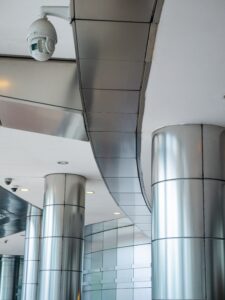
Choosing the right security camera is an important decision when setting up a CCTV surveillance system for your home, business, office, warehouse, or commercial property. Two of the most common options are PTZ cameras and fixed cameras. But what is the difference between them, and which one is better for your security needs?
A PTZ camera, meaning Pan-Tilt-Zoom camera, can move horizontally, move vertically and zoom in on specific areas. A fixed security camera, on the other hand, remains pointed at a predetermined area. Kenyan CCTV specifications commonly distinguish between fixed cameras for continuous coverage of a defined area and PTZ cameras for wider, controllable surveillance.
The best choice depends on factors such as coverage area, camera placement, monitoring requirements, budget, image detail and the level of control you need. In many cases, the most effective CCTV system combines fixed cameras for continuous coverage with PTZ cameras for active monitoring and detailed observation.
What Is a PTZ Camera?
A PTZ camera is a Pan-Tilt-Zoom security camera designed to provide flexible surveillance over a large area.
The “pan” function allows the camera to move from side to side, while “tilt” allows it to move up and down. The “zoom” function allows the operator to bring distant objects closer for more detailed viewing.
Depending on the model, PTZ cameras can offer features such as:
– Remote pan and tilt control
– Optical zoom
– Automatic tracking
– Preset viewing positions
– Motion detection
– Night vision
– Intelligent video analytics
– Remote monitoring
Some professional PTZ systems are designed for extensive outdoor areas and can provide very wide coverage combined with powerful optical zoom. Kenyan public-sector CCTV specifications, for example, include PTZ cameras with 360-degree coverage and optical zoom for perimeter monitoring.
PTZ cameras are particularly useful where security personnel need to actively monitor a large area and zoom in on people, vehicles or other objects of interest.
What Is a Fixed Security Camera?
A fixed security camera is installed in one position and continuously monitors the area it is aimed at. Its field of view depends on factors such as the lens, focal length, mounting position and camera design.
Common types include:
– Fixed dome cameras
– Fixed bullet cameras
– Indoor CCTV cameras
– Outdoor security cameras
– Wide-angle fixed cameras
– Fixed IP cameras
Fixed cameras are often ideal for entrances, corridors, gates, reception areas, parking spaces and other locations where a specific area needs continuous monitoring.
For example, a fixed camera pointed at a business entrance will continue recording that entrance regardless of what is happening elsewhere on the property.
PTZ Cameras vs Fixed Cameras: Key Differences
The biggest difference between PTZ and fixed cameras is movement and coverage flexibility.
A fixed camera provides consistent surveillance of one area. A PTZ camera can change its viewing direction and zoom into different areas.
| Feature | PTZ Camera | Fixed Camera |
| Camera movement | Pan and tilt | Fixed position |
| Zoom | Often optical zoom | Usually fixed or limited |
| Coverage flexibility | Very high | Limited to the selected viewing area |
| Remote control | Usually available | Generally not applicable |
| Large-area monitoring | Excellent | Requires multiple cameras |
| Continuous view of one area | Good | Excellent |
| Installation | More complex | Generally simpler |
| Cost | Usually higher | Generally more affordable |
| Best use | Active monitoring | Continuous monitoring |
| Tracking | Available on many models | Limited, depending on the system |
The important point is that more movement does not automatically mean better surveillance. A PTZ camera can monitor different areas, but when it moves away from one location, it may no longer be viewing that location. Fixed cameras provide a consistent view of their assigned areas.
PTZ Cameras vs Fixed Cameras: Coverage and Field of View
Coverage is one of the biggest factors to consider when comparing PTZ and fixed CCTV cameras.
A fixed camera has a defined field of view. Once installed, it continuously watches that area. If you need to monitor several directions, you may need several fixed cameras.
A PTZ camera can move across a much wider area. This makes it useful for open spaces such as:
– Large compounds
– Parking lots
– Warehouses
– Construction sites
– School grounds
– Industrial facilities
– Perimeters
– Large commercial properties
However, PTZ coverage should not be confused with simultaneous coverage. A PTZ camera can move between areas, but it cannot necessarily provide the same continuous, simultaneous view of multiple directions as several strategically positioned fixed cameras.
This is why professional CCTV designs may use fixed cameras for general surveillance and PTZ cameras as additional cameras for monitoring and detailed inspection.
PTZ Cameras vs Fixed Cameras: Image Quality and Zoom
Both PTZ and fixed cameras can provide high-resolution video. However, PTZ cameras have a major advantage when optical zoom is required.
Optical zoom allows the camera to magnify a distant subject while maintaining significantly more detail than simply digitally enlarging an image.
This can be valuable when monitoring:
– Vehicle registration areas
– Large gates
– Building entrances
– Long driveways
– Perimeters
– Parking areas
– Large compounds
A PTZ camera can therefore be positioned to provide a wide view and then zoomed in when an operator needs to examine a particular person, vehicle or event.
Fixed cameras, however, can provide excellent image quality within their intended field of view. A high-resolution fixed camera with the correct lens and positioning can be a better option when you need reliable, continuous recording of one specific area.
Advantages of PTZ Cameras
PTZ cameras offer several important benefits.
1. Wide-area surveillance
A single PTZ camera can cover a large area by moving between different viewing positions.
2. Remote control
Security personnel can control the camera remotely and change its viewing angle when required.
3. Powerful zoom
Optical zoom allows operators to inspect distant subjects in greater detail.
4. Automatic tracking
Some advanced PTZ cameras can automatically track moving objects or people using built-in analytics.
5. Preset positions
A PTZ camera can be programmed to move between predefined viewing locations, making it easier to monitor several important areas.
6. Suitable for large properties
PTZ cameras are particularly useful for large outdoor areas where installing numerous fixed cameras may not be practical.
Disadvantages of PTZ Cameras
Despite their advantages, PTZ cameras are not perfect for every application.
1. Higher cost
PTZ cameras generally cost more than basic fixed CCTV cameras because they incorporate motorized movement and, often, optical zoom.
2. Moving parts
Unlike fixed cameras, PTZ cameras have mechanical components that move. This can make their installation and maintenance more complex.
3. They cannot watch everything at once
When a PTZ camera moves to monitor one area, another area may temporarily fall outside its field of view.
4. More complex installation
A PTZ system may require careful configuration of presets, tracking, control and network infrastructure.
5. Operator involvement may be beneficial
The full potential of a PTZ camera is often realized when someone can monitor and control it, although modern models may offer automatic tracking and analytics.
Advantages of Fixed Security Cameras
Fixed CCTV cameras remain one of the most practical security solutions for homes and businesses.
Continuous monitoring
Once correctly positioned, a fixed camera continuously watches its assigned area without changing direction.
Cost-effective surveillance
If you need to monitor several specific locations, multiple fixed cameras can provide dedicated coverage at a predictable cost.
Simple positioning
Fixed cameras are generally easier to install and configure because there are fewer moving components.
Reliable area coverage
A fixed camera provides a consistent field of view, which can be valuable when reviewing recorded footage after an incident.
Wide range of options
Fixed cameras are available in different designs, resolutions, lens types and weatherproof ratings for both indoor and outdoor applications.
Disadvantages of Fixed Cameras
The main limitation is their lack of movement.
A fixed camera cannot pan across a property or zoom into a distant object unless it has a specialized lens or other functionality. If the camera is pointed incorrectly, an important area may remain outside its field of view.
Large properties may also require several fixed cameras to achieve adequate coverage.
PTZ vs Fixed Camera: Which Is Better for Home Security?
For many homes, a fixed security camera is sufficient.
If you want to monitor a front door, driveway, gate, backyard or parking area, a strategically positioned fixed camera can provide continuous surveillance of that specific location.
A PTZ camera may make more sense for a large residential compound where there is a significant area to monitor.
For homeowners in Nairobi and other parts of Kenya, the decision should therefore be based on the property’s layout rather than simply choosing the camera with the most features.
PTZ vs Fixed Camera: Which Is Better for Business Security?
Businesses often benefit from using both camera types.
A retail shop, office or small commercial property may use fixed cameras to monitor entrances, tills, corridors and other critical locations.
Larger properties such as warehouses, factories, schools, hotels and commercial compounds can add PTZ cameras to monitor open spaces and investigate suspicious activity.
For example, a warehouse in Nairobi’s industrial area could use fixed cameras to continuously monitor entrances and loading zones, while a PTZ camera provides flexible monitoring of the wider compound.
Can PTZ and Fixed Cameras Be Used Together?
Yes. In fact, combining PTZ and fixed cameras can create a more comprehensive CCTV surveillance system.
Fixed cameras can provide constant overview coverage, while a PTZ camera can be used when security personnel need to follow an event, investigate movement or zoom into a specific area.
This approach is reflected in Kenyan CCTV specifications, where PTZ cameras are described as supporting static cameras.
For a large property, you might therefore have:
Fixed cameras → continuous coverage
PTZ camera → active monitoring and detailed inspection
NVR → video recording and storage
Network/mobile access → remote monitoring
The exact configuration should be determined by the property’s layout, security requirements and available budget.
PTZ Cameras vs Fixed Cameras: Which Should You Choose?
There is no single answer to which camera is better.
Choose PTZ cameras if you need:
– Wide-area surveillance
– Remote camera control
– Optical zoom
– Monitoring of large outdoor areas
– Active tracking
– Detailed inspection of distant subjects
– Flexible viewing angles
Choose fixed cameras if you need:
– Continuous monitoring of specific areas
– Simpler installation
– Cost-effective CCTV coverage
– Reliable recording of entrances and access points
– Indoor or outdoor surveillance of defined locations
For many homes and businesses, the best solution is not PTZ vs fixed, but PTZ plus fixed cameras.
The right CCTV system should be designed around the areas that need protection, potential blind spots, lighting conditions, required image detail, recording requirements and budget.
Frequently Asked Questions
Is a PTZ camera better than a fixed camera?
Not necessarily. PTZ cameras offer greater flexibility and zoom, while fixed cameras provide consistent monitoring of a specific area. The better option depends on your surveillance requirements.
Are PTZ cameras good for large areas?
Yes. PTZ cameras are particularly useful for large open areas because they can pan, tilt and zoom to monitor different sections of a property.
Do PTZ cameras replace fixed cameras?
Not always. PTZ cameras are often most effective when used alongside fixed cameras. Fixed cameras provide continuous coverage while PTZ cameras provide flexible monitoring.
Are fixed CCTV cameras cheaper than PTZ cameras?
Generally, fixed cameras are more affordable because they have a simpler design and do not require motorized pan, tilt and zoom mechanisms. However, prices vary according to resolution, lens, night vision, storage and smart features.
What is the best CCTV camera for a large compound?
A combination of fixed cameras and PTZ cameras can be highly effective. Fixed cameras can cover important access points, while a PTZ camera can monitor larger open areas and zoom into specific events.
Final Verdict: PTZ Cameras vs Fixed Cameras
The choice between PTZ cameras vs fixed cameras ultimately comes down to what you want your CCTV system to accomplish.
Fixed cameras are excellent for continuous, reliable surveillance of specific areas. PTZ cameras are better suited to large areas where flexible viewing, remote control and optical zoom are important.
For homes, shops and offices, fixed cameras may provide the most practical solution. For large compounds, warehouses, schools, industrial sites and commercial properties, PTZ cameras can add valuable flexibility.
For the strongest overall security setup, consider combining both. A professionally planned CCTV system can use fixed cameras to eliminate blind spots and PTZ cameras to provide active monitoring of larger areas.
Looking for CCTV Cameras in Nairobi and Kenya?
If you are looking for CCTV cameras in Nairobi, PTZ cameras, fixed security cameras, IP cameras or complete surveillance solutions, MK Homestyles can help you choose the right equipment for your property.
We provide security, electrical, smart home and power solutions designed for different residential and commercial applications. Whether you need a PTZ camera in Nairobi, fixed CCTV cameras for your home, or a complete CCTV surveillance system for your business, contact MK Homestyles Agencies Limited for guidance on choosing the right camera, coverage and setup for your needs.
From CCTV cameras in Nairobi and Kenya to smart security solutions and other MK Homestyles smart home products, choose a solution based on your property’s actual security requirements—not simply the number of features on the camera.