Skip to content
Fast and reliable delivery

MK Homestyles Guide

Solar vs. Electricity Security Lights: Which One Saves You More Money in Kenya?

May 8, 2026 admin Uncategorized

Security lighting has become a necessity for homes, apartments, businesses, compounds, farms, and commercial buildings across Kenya. From deterring intruders to improving night visibility, outdoor security lights are now an integral part of modern property protection.

But one question continues to dominate among Kenyan homeowners and business owners:

Should you choose solar or electricity-powered security lights?

With rising electricity bills, unreliable power supply in some areas, and the growing popularity of solar technology, many people are now shifting toward solar-powered lighting solutions. At the same time, traditional electric security lights remain common because of their consistent brightness and familiarity.

In this detailed guide, we compare solar and electricity security lights in Kenya to help you understand Initial costs, Installation expenses, monthly electricity consumption, maintenance requirements, long-term savings, durability, performance during blackouts, and best use cases for each option.

By the end of this article, you will clearly understand which option saves more money and which one is best suited for your property. Let’s jump in.

Understanding Solar Security Lights

What Are Solar Security Lights?

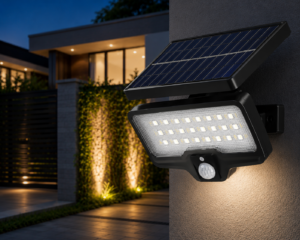
Solar security lights are advanced outdoor lighting systems that operate entirely using energy from the sun. Unlike traditional security lights that depend on electricity from the national grid, solar-powered security lights generate, store, and use their own power independently. This makes them one of the most cost-effective, energy-efficient, and environmentally friendly lighting solutions for homes and businesses in Kenya.

These lights are designed to improve outdoor security by illuminating compounds, gates, parking areas, pathways, perimeter walls, gardens, shops, warehouses, farms, and commercial premises during the night. Because they do not require wiring to the main power supply, solar security lights are especially popular in areas that experience frequent blackouts or have limited access to electricity.

Over the past few years, solar security lighting technology has improved significantly. Modern systems are now brighter, longer-lasting, smarter, and more reliable than earlier models. Most high-quality solar security lights available in Kenya today are equipped with advanced features such as:

  • High-efficiency monocrystalline solar panels for faster charging even during cloudy weather
  • Long-life lithium-ion or LiFePO4 batteries for improved energy storage and durability
  • Motion detection sensors that automatically detect movement and increase brightness
  • Automatic dusk-to-dawn technology that turns lights on at sunset and off at sunrise
  • Waterproof and weather-resistant housing designed to withstand rain, dust, and harsh outdoor conditions
  • Ultra-bright LED chips that provide powerful illumination while consuming very little energy

One of the main reasons solar security lights are becoming increasingly popular in Kenya is that they operate completely independently of Kenya Power electricity. Once installed, they use free solar energy daily, helping homeowners and businesses significantly reduce electricity bills while maintaining reliable outdoor lighting and security.

How Solar Security Lights Work

Solar security lights use a simple but highly efficient energy conversion process to provide nighttime lighting. The system combines solar energy harvesting, battery storage, automatic controls, and LED technology to deliver continuous illumination without external electricity.

Here is a step-by-step explanation of how the system works:

1. The Solar Panel Collects Sunlight During the Day

During daylight hours, the solar panel absorbs sunlight and converts it into electrical energy using photovoltaic (PV) cells. Most premium solar security lights use monocrystalline solar panels because they are more efficient and charge faster than older polycrystalline panels.

The amount of energy collected depends on:

  • Sunlight intensity
  • Panel size
  • Weather conditions
  • Positioning of the solar panel

Kenya’s strong sunlight throughout most of the year makes solar lighting highly effective in many parts of the country.

2. Energy Is Stored in Rechargeable Batteries

The electricity generated by the solar panel is transferred to rechargeable batteries inside the lighting system. These batteries store energy during the day so the light can operate at night.

Modern solar security lights commonly use:

  • Lithium-ion batteries
  • LiFePO4 (Lithium Iron Phosphate) batteries

LiFePO4 batteries are especially popular because they:

  • Last longer
  • Charge faster
  • Handle heat better
  • Offer improved safety
  • Maintain stable performance over many years

3. The Light Automatically Turns On at Night

Most solar security lights are equipped with intelligent light sensors that detect darkness. Once evening arrives, the system automatically switches on the LED lights without requiring manual operation.

This automatic dusk-to-dawn functionality ensures:

  • Convenience
  • Consistent nighttime lighting
  • Better security coverage
  • Energy efficiency

4. Motion Sensors Detect Movement

Many modern solar security lights also include PIR (Passive Infrared) motion sensors. These sensors detect human movement, vehicles, or animals within a certain range.

When motion is detected:

  • The light instantly increases brightness
  • The illuminated area becomes more visible
  • Potential intruders are deterred

After a short period without movement, the light may dim again to conserve battery power.

This smart feature helps extend battery life while maximizing security.

5. The Charging and Lighting Cycle Repeats Daily

The entire process repeats automatically every day:

  • Charging during daylight
  • Lighting at night
  • Motion detection when needed

Because the system is self-sustaining, solar security lights can provide reliable lighting for years with minimal maintenance.

Why Solar Security Lights Are Ideal for Kenya

Solar security lights are particularly suitable for Kenyan homes and businesses because they help solve several common challenges, including:

  • Rising electricity costs
  • Frequent power outages
  • Expensive outdoor wiring installations
  • Limited electricity access in rural areas
  • Security concerns around homes and businesses

With Kenya receiving abundant sunshine throughout the year, solar-powered lighting systems can operate efficiently in both urban and rural environments.

Whether installed in Nairobi, Kisumu, Mombasa, Eldoret, Nakuru, or remote upcountry areas, solar security lights provide an affordable and sustainable security solution without ongoing electricity expenses.

Understanding Electricity Security Lights

What Are Electric Security Lights?

Electric security lights are outdoor lighting systems powered directly by the main electricity supply, typically from Kenya Power, backup generators, or inverter systems. Unlike solar-powered lights that generate their own energy from sunlight, electric security lights depend entirely on a continuous electricity connection to operate.

These lighting systems are commonly installed in residential homes, apartment buildings, commercial properties, office compounds, warehouses, schools, hotels, hospitals, parking lots, and industrial premises across Kenya. Their main purpose is to improve nighttime visibility, enhance security, deter intruders, and provide reliable illumination for outdoor spaces.

Modern electric security lighting systems come in a wide range of designs and technologies, including:

  • LED floodlights
  • Motion sensor security lights
  • Halogen floodlights
  • Wall-mounted outdoor lights
  • Perimeter lighting systems
  • Smart security lights with automatic controls
  • Commercial high-power floodlights

Because they are connected directly to electricity, these lights can provide strong, stable, and continuous brightness throughout the night without depending on weather conditions or battery storage.

One reason electric security lights remain popular in urban areas is their ability to deliver extremely high illumination levels for large compounds, commercial buildings, and busy outdoor spaces. In cities such as Nairobi, Mombasa, and Kisumu, electric security lights are widely used in apartments, gated communities, shopping centers, and office complexes where reliable grid electricity is available.

However, despite their advantages, electric security lights have one major downside: they consume electricity every day. Since the lights rely on continuous electrical power, they directly increase monthly electricity bills, especially when used for long hours every night.

In addition, electric lighting systems are heavily affected by:

  • Power outages
  • Rising electricity tariffs
  • Wiring maintenance costs
  • Electrical faults
  • Generator fuel expenses during blackouts

As electricity prices continue to rise in Kenya, many homeowners and businesses are now comparing electric security lights with solar alternatives to determine which option offers better long-term savings.

Initial Purchase Cost: Which Option Is Cheaper?

When choosing between solar and electric security lights, one of the first considerations for most buyers is the upfront purchase price. While the initial buying cost is important, it is equally essential to consider long-term operating and maintenance expenses before making a decision.

At first glance, electric security lights often appear cheaper. However, solar security lights may provide better long-term value because they eliminate ongoing electricity costs.

Solar Security Light Costs in Kenya

The price of solar security lights in Kenya varies significantly depending on several important factors, including:

  • Wattage and brightness level
  • Battery capacity
  • Solar panel quality and efficiency
  • Lighting duration
  • Motion sensor technology
  • Waterproof rating
  • Brand reputation
  • Build quality and durability

Premium solar lights equipped with monocrystalline solar panels and LiFePO4 batteries are generally more expensive because they offer:

  • Faster charging
  • Longer battery lifespan
  • Better performance during cloudy weather
  • Higher brightness levels
  • Improved reliability

Average Solar Security Light Prices in Kenya

Solar Light TypeEstimated Price
Small solar wall lightKSh 1,500 – 4,000
Medium solar floodlightKSh 4,500 – 12,000
Large commercial solar security lightKSh 15,000 –60,000+

Commercial-grade solar street lights and high-wattage floodlights can cost even more depending on battery size and lighting capacity.

Although solar security lights may seem expensive initially, they have one major financial advantage: after installation, they operate using free solar energy. This means there are no monthly electricity bills associated with their operation.

Over time, the savings on electricity can offset the higher upfront investment, especially for homes and businesses that use outdoor lighting every night.

Electric Security Light Costs in Kenya

Electric security lights are generally cheaper to purchase initially because they do not require solar panels or rechargeable battery systems. Since they rely on existing electricity connections, manufacturers only need to include the lighting unit itself.

This lower upfront price is one reason many homeowners initially choose electric lighting systems.

Average Electric Security Light Prices in Kenya

Electric Light TypeEstimated Price
Basic LED security lightKSh 800 – 3,000
Motion sensor floodlightKSh 3,000 – 8,000
Commercial floodlightKSh 8,000 –30,000

At first glance, electric security lights may appear to be the more affordable option.

However, many buyers fail to consider the hidden long-term costs that come after purchase, including:

  • Monthly electricity bills
  • Electrical wiring materials
  • Electrician installation fees
  • Maintenance costs
  • Increased power consumption over time
  • Generator fuel expenses during blackouts

As a result, a cheaper initial purchase can eventually become more expensive over several years of daily use.

Installation Costs Comparison

Installation expenses are often overlooked when comparing solar and electric security lights. However, installation can significantly affect the total cost of ownership, especially for larger compounds or commercial properties.

Solar Security Light Installation Costs

One of the biggest advantages of solar security lighting is its relatively simple and affordable installation process.

Most solar security lights:

  • Require no underground trenching
  • Need no electrical wiring
  • Do not depend on Kenya Power connections
  • Require minimal accessories
  • Can operate independently
  • Are easy to relocate if needed

Because of this simplicity, many homeowners install solar lights themselves without professional assistance.

Typical Solar Light Installation Costs

ItemEstimated Cost
DIY installationFree
Technician installationKSh 500 –3,000

This low installation cost makes solar lighting highly attractive for:

  • Rural homes
  • Farms
  • Construction sites
  • Gated compounds
  • Remote areas
  • Areas without electricity access

Solar lighting is also ideal for places where extending electrical wiring would be expensive or impractical.

Electric Security Light Installation Costs

Electric security lights often require more complex installation work because they must connect safely to the electrical supply system.

Installation may involve:

  • Electrical wiring
  • PVC conduits
  • Junction boxes
  • Switches
  • Circuit breakers
  • Extension cables
  • Distribution boards
  • Pole mounting systems
  • Labor from licensed electricians

For large compounds, the installation process can become extensive and costly.

Typical Electric Security Light Installation Costs

ItemEstimated Cost
Wiring materialsKSh 2,000 –20,000+
Electrician chargesKSh 2,000 –15,000+
Pole installationAdditional cost

Large homes, apartment complexes, schools, warehouses, and commercial compounds may require long cable runs and multiple lighting points, which significantly increase labor and material costs.

In some cases, installation expenses may exceed the actual cost of the lighting fixtures themselves.

Additionally, future maintenance or electrical faults may require further spending on repairs and technician services.

Monthly Electricity Bills: The Biggest Difference

When comparing solar security lights vs electricity-powered security lights in Kenya, the biggest long-term cost difference comes from monthly electricity consumption.

While the initial purchase price is important, the real financial impact becomes visible after months and years of daily use. Security lights typically operate every single night, often for long hours, meaning even small electricity costs gradually accumulate into significant expenses.

This is where solar security lighting gains a major advantage for Kenyan homes and businesses.

Solar Security Lights Have Zero Monthly Electricity Costs

Solar security lights operate using energy harvested directly from sunlight. During the day, the solar panel absorbs solar energy and stores it inside rechargeable lithium batteries. At night, the stored energy powers the LED lighting system automatically.

Because of this self-sustaining system:

  • Solar lights do not consume electricity
  • They do not add any cost to your monthly electricity bill
  • They continue functioning during power blackouts
  • They reduce overall household and commercial energy consumption
  • They help property owners become less dependent on rising electricity tariffs

Once installed, the sun becomes your free long-term energy source.

This is especially beneficial in Kenya, where electricity prices continue to fluctuate due to:

  • Fuel cost adjustments
  • Inflation
  • Energy demand increases
  • Tax and regulatory charges
  • Grid maintenance costs

For many homeowners, reducing unnecessary electricity consumption has become a major financial priority, particularly for devices like outdoor lighting that run every night for many hours.

Why Security Lights Significantly Affect Electricity Bills

Many people underestimate how much outdoor lighting contributes to electricity expenses because each individual bulb may appear small. However, security lights are usually:

  • Used daily
  • Left on for long durations
  • Installed in multiple locations around a property
  • Required throughout the year

Unlike appliances used occasionally, security lighting operates consistently, making it one of the most continuous forms of electricity consumption in homes and businesses.

For example, a typical compound may have lights installed:

  • At the gate
  • Around perimeter walls
  • In parking areas
  • Along pathways
  • At the entrance
  • In the backyard

When all these lights operate simultaneously every night, electricity usage rises substantially over time.

Real Cost Example for Electricity Security Lights in Kenya

Let us look at a practical example using common outdoor floodlights.

Suppose a homeowner installs:

  • Four 100W electric floodlights
  • Operating for approximately 10 hours every night

Step 1: Calculate Daily Electricity Usage

Each floodlight consumes:

100W \times 4 = 400W

Total lighting load becomes:

400W = 0.4kW

If the lights run for 10 hours daily:

0.4kW \times 10h = 4kWh

Daily electricity consumption becomes approximately 4 kilowatt-hours (kWh).

Step 2: Calculate Monthly Consumption

Over 30 days:

4kWh \times 30 = 120kWh

Monthly electricity usage becomes approximately 120 kWh.

What This Means Financially in Kenya

In Kenya, electricity pricing includes:

  • Base energy charges
  • Fuel energy cost adjustments
  • VAT
  • Inflation adjustments
  • Regulatory levies
  • Rural electrification charges

This means the actual cost per unit of electricity is often higher than many consumers expect.

Therefore, using 120 kWh monthly purely for outdoor security lighting can noticeably increase electricity bills over time.

Now imagine:

  • Larger compounds
  • Apartment buildings
  • Businesses
  • Schools
  • Warehouses
  • Hotels
  • Commercial premises

Many of these properties use:

  • 10 to 30 floodlights
  • Higher wattage systems
  • All-night operation

Their monthly outdoor lighting costs can become extremely high annually.

Long-Term Financial Impact of Electric Security Lights

The biggest issue with electricity-powered security lights is not necessarily the monthly bill alone — it is the cumulative long-term cost.

For example:

A property spending even a modest amount monthly on security lighting may eventually spend:

  • Tens of thousands of shillings over several years
  • More money on electricity than on the original lighting equipment itself

Additionally, electricity tariffs in Kenya are not fixed permanently. Future price increases can further raise operational costs.

This means electric security lights create a recurring expense that continues for the entire lifespan of the lighting system.

Why Solar Security Lights Save More Money Over Time

Solar security lights eliminate this recurring monthly cost.

Once the system is purchased and installed:

  • Daily operation becomes essentially free
  • Sunlight replaces paid electricity
  • Long-term running costs become minimal

This makes solar lighting particularly cost-effective for:

  • Homeowners
  • Rental apartments
  • Schools
  • Churches
  • Farms
  • Petrol stations
  • Warehouses
  • Commercial compounds
  • Gated communities

In many cases, the money saved on electricity bills over several years can exceed the initial cost of the solar lighting system.

Additional Financial Advantages of Solar Security Lights

Beyond reducing electricity bills, solar lighting also helps users avoid other indirect energy-related expenses.

Protection During Blackouts

Since solar lights use stored battery power:

  • Security lighting remains active during outages
  • No generator fuel is required
  • No emergency backup systems are needed

This is particularly valuable in areas that experience unreliable electricity supply.

Reduced Wiring Costs

Because solar lights operate independently:

  • Less electrical wiring is needed
  • Fewer electrical repairs are required
  • Expansion becomes cheaper

For large compounds, this can save substantial installation and maintenance costs.

Long-Term Electricity Costs: Which Option Saves More Money?

When comparing solar security lights and electric security lights, the biggest financial difference appears in long-term operating costs. While the initial purchase price is important, the real cost of outdoor lighting is determined by how much money you continue spending month after month and year after year.

This is where solar security lights gain a major economic advantage over traditional electricity-powered lighting systems.

Solar Security Lights Have Zero Monthly Electricity Bills

One of the greatest benefits of solar security lighting is that it operates entirely using free energy from the sun. Once the system is installed, the solar panel continuously charges the internal battery during the day, allowing the light to operate at night without drawing any electric power.

Solar security lights are completely independent of the electrical grid:

  • They do not increase your monthly electricity bill
  • They continue working during blackouts and power outages
  • They reduce household or business energy consumption
  • They lower dependence on expensive grid electricity
  • They provide long-term savings with minimal operating costs

This makes solar lighting particularly valuable in Kenya, where electricity prices have continued to rise over the years due to increasing fuel costs, taxes, infrastructure charges, and tariff adjustments.

For many households and businesses, outdoor security lighting operates for long hours every night. Over time, even energy-efficient electric lights can accumulate significant electricity costs.

With solar security lights, however, the cost of lighting after installation becomes almost negligible.

How Solar Lighting Saves Money Over Time

Although solar security lights may cost more initially, they essentially convert sunlight into free daily electricity. This means the system begins saving money immediately after installation.

For example, a homeowner using several electric floodlights every night may spend thousands of shillings annually on outdoor lighting alone. By switching to solar security lights:

  • Monthly outdoor lighting expenses can drop close to zero
  • There are no recurring electricity charges for lighting
  • Energy savings continue for years
  • Long-term return on investment improves significantly

In many cases, the savings generated over several years can exceed the original purchase cost of the solar lights. This is one reason solar security lighting is becoming increasingly popular in:

  • Homes
  • Apartments
  • Schools
  • Hotels
  • Farms
  • Warehouses
  • Gated communities
  • Commercial properties

For businesses operating large compounds with multiple lights, the long-term savings can be especially substantial.

Solar Security Lights During Power Blackouts

Another major advantage of solar security lighting is reliability during electricity outages. Since solar lights operate independently using stored battery power:

  • They continue functioning even when the main power supply fails
  • Security is maintained during blackouts
  • Compounds remain illuminated at night
  • Intruders are less likely to exploit dark areas

This is particularly important in areas where power interruptions are common. Unlike electric security lights, solar-powered systems do not rely on:

  • Generators
  • Fuel
  • Backup inverters
  • Continuous grid electricity

This further reduces long-term operational costs.

Electric Security Lights Increase Monthly Electricity Bills

Electric security lights rely entirely on electrical power every night they operate. Regardless of whether they use LED technology or traditional halogen bulbs, they still consume electricity continuously during use.

While modern LED floodlights are more energy-efficient than older lighting systems, they still contribute to higher electricity bills when operated daily for extended hours.The more lights installed on a property, the greater the monthly power consumption becomes.

Understanding Electricity Consumption

Electricity consumption is measured in kilowatt-hours (kWh), which determines how much consumers pay on their electricity bills.

Even relatively efficient floodlights can consume a significant amount of energy over time because outdoor security lighting often runs for 8–12 hours every night, every day of the year. This continuous usage causes electricity costs to accumulate steadily.

Example Electricity Cost Calculation

Consider a property using:

  • Four 100W electric floodlights
  • Operating for 10 hours every night

Daily Electricity Usage

400W × 10 hours = 4,000 watt-hours

This equals:

4 kWh per day

Monthly Electricity Usage

4 kWh × 30 days = 120 kWh per month

This is a significant amount of electricity consumption for lighting alone.

With rising electricity tariffs in Kenya, these costs can noticeably increase monthly household or business power bills over time.

Why Electricity Costs Keep Rising

Several factors continue to increase electricity expenses in Kenya, including:

  • Rising fuel adjustment charges
  • Higher energy demand
  • Inflation
  • Taxes and levies
  • Grid maintenance costs
  • Currency fluctuations are affecting fuel imports

As electricity prices rise, the long-term operating cost of electric security lights also increases. This means a lighting system that initially seemed affordable may become expensive to maintain over several years.

Commercial Properties Face Even Higher Costs

For businesses, apartment complexes, schools, warehouses, shopping centers, and gated communities, electricity costs can become much higher because they often use:

  • Multiple floodlights
  • High-wattage commercial lighting
  • All-night perimeter lighting
  • Parking lot illumination
  • Security lights are operating continuously

In such environments, monthly electricity expenses for outdoor lighting alone can become substantial. This is why many businesses are now shifting toward solar-powered outdoor lighting systems as a way of reducing operational expenses and improving energy efficiency.

Which Option Saves More Money Long-Term?

When comparing long-term operating expenses:

Solar Security Lights

✔ No monthly electricity bills
✔ Free solar energy every day
✔ Lower long-term operating costs
✔ Continue working during blackouts
✔ Minimal maintenance expenses

Electric Security Lights

✖ Continuous electricity consumption
✖ Higher monthly utility bills
✖ Increased costs as electricity tariffs rise
✖ Dependent on grid power availability
✖ May require backup generators during outages

Over time, solar security lights usually provide far greater financial savings, especially for users who require outdoor lighting every night, year-round.

Long-Term Savings Comparison: Why Lifetime Value Matters More Than Purchase Price

When evaluating solar security lights vs electric security lights in Kenya, one of the most important but often overlooked factors is the lifetime cost of ownership. This refers to the total money spent on a lighting system over many years — not just the purchase price.

Security lighting is not a one-time-use product. It runs every night, often for 8–12 hours, meaning its financial impact accumulates slowly but consistently over time.

This is why different user groups benefit differently depending on the lighting system they choose.

Who Benefits Most From Solar Security Lights?

Solar lighting delivers the highest financial advantage for users with long-term or high-coverage lighting needs, especially where lights operate daily.

1. Long-Term Homeowners

Homeowners who plan to stay in a property for many years benefit the most because:

  • Electricity savings accumulate year after year
  • Maintenance remains low
  • No exposure to rising electricity tariffs

Over time, solar lighting often pays for itself through avoided electricity costs.

2. Rental Properties

For landlords and property managers:

  • Common-area lighting (gates, parking, corridors) runs daily
  • Electricity costs are usually passed indirectly to tenants or reduce profit margins
  • Solar systems reduce operational expenses permanently

This improves long-term rental profitability.

3. Schools and Educational Institutions

Schools often require:

  • Perimeter lighting
  • Dormitory security lighting
  • Staff housing lighting

Solar lighting helps reduce:

  • Monthly operational costs
  • Dependence on fluctuating budgets for electricity

4. Churches and Religious Institutions

Church compounds typically have:

  • Large outdoor spaces
  • Evening services and events
  • Security lighting needs

Solar systems provide reliable lighting without increasing utility bills, which is important for non-profit operations.

5. Farms and Agricultural Properties

Farms benefit significantly because:

  • Wiring large outdoor spaces is expensive
  • Grid electricity may be unavailable or unstable
  • Security lighting is needed over wide areas

Solar lights eliminate the need for long-distance electrical infrastructure.

6. Warehouses and Industrial Compounds

For commercial facilities:

  • Lighting often runs every night
  • Large areas require multiple floodlights
  • Electricity costs can escalate quickly

Solar reduces long-term operational expenditure significantly.

Performance During Blackouts in Kenya

Kenya experiences periodic power interruptions due to:

  • Grid maintenance
  • Weather conditions (especially heavy rains and storms)
  • Transmission faults
  • Regional load shedding or system overloads

These interruptions make blackout resilience an important factor in security lighting decisions.

Solar Security Lights During Blackouts

Solar lighting systems operate independently of the national grid.

They function through a simple but efficient energy cycle:

  • Daytime: solar panels convert sunlight into stored electrical energy
  • Nighttime: stored energy powers LED lights automatically

Key Advantages During Outages:

  • Lighting continues even when the entire neighborhood loses power
  • Security systems remain active at night
  • No dependence on Kenya Power supply stability
  • Reduced risk of theft or intrusion during dark periods

For areas with unreliable electricity, this independence is a major security advantage.

Electric Security Lights During Blackouts

Electric lighting systems depend entirely on grid electricity. When power goes off:

  • The lights turn off immediately
  • Security visibility is lost unless backup systems exist

To maintain lighting during outages, property owners must invest in:

  • Generators (fuel-powered backup systems)
  • Inverters with battery storage
  • Solar hybrid systems (which increase costs further)

Additional Costs Introduced:

  • Fuel expenses for generators
  • Maintenance of backup systems
  • Battery replacement costs in inverter systems
  • Noise and operational inconvenience

Without backup solutions, properties become completely dark during outages, increasing security risks.

Maintenance Costs: Long-Term Reliability Matters

Maintenance plays a major role in the total cost of ownership over several years.

Solar Security Light Maintenance

Modern solar lighting systems are designed for low maintenance due to their integrated structure.

Typical maintenance requirements:

  • Cleaning solar panels (to remove dust and improve charging efficiency)
  • Battery replacement after several years of use (depending on quality and capacity)

Battery lifespan:

High-quality lithium or LiFePO₄ batteries typically last:

  • 3 to 7 years, depending on charging cycles, usage patterns, and environmental conditions

LED lifespan:

Modern LED chips used in solar lights can last:

  • 30,000 to 50,000+ hours, making them highly durable

Overall, solar systems have fewer moving or external electrical components, reducing failure points.

Electric Security Light Maintenance

Electric systems typically involve more components exposed to wear and environmental damage.

Common maintenance requirements:

  • Bulb or LED driver replacement
  • Wiring repairs or rewiring
  • Electrical fault troubleshooting
  • Surge protection maintenance or replacement

Environmental risks to wiring:

Outdoor electrical systems are exposed to:

  • Rain and moisture (causing corrosion or short circuits)
  • High heat exposure
  • Rodents chewing cables
  • Power surges from the grid

Over time, these factors increase maintenance frequency and cost.

Brightness and Performance Comparison

Lighting performance is a key factor in choosing between solar and electric systems.

Electric Security Lights: Strong Continuous Output

Electric floodlights typically provide:

  • High and stable brightness
  • Continuous operation throughout the night
  • Higher wattage capacity (suitable for large installations)

Best suited for:

  • Stadiums
  • Large factories
  • Industrial zones
  • High-security commercial areas requiring intense illumination

They are ideal where maximum brightness is the primary requirement.

Modern Solar Security Lights: Significant Technological Improvement

Earlier generations of solar lights were often criticized for:

  • Low brightness
  • Short battery life
  • Poor performance during cloudy days

However, modern systems have significantly improved due to advances in:

  • LED efficiency
  • Lithium battery storage
  • Smart energy management systems
  • Motion-sensor technology

Modern solar features include:

  • High lumen output LED arrays
  • Large-capacity lithium batteries
  • Motion detection for energy efficiency
  • Intelligent brightness adjustment (dim/bright modes)

Coverage capability:

High-quality solar floodlights can now effectively illuminate:

  • Residential compounds
  • Parking areas
  • Driveways
  • Perimeter fencing
  • Small commercial spaces

For most Kenyan households and small businesses, modern solar lighting is now sufficient for security purposes.

Environmental Impact: Energy Source Matters

Solar Security Lights

Solar lighting is based on renewable energy and contributes to:

  • Reduced carbon emissions
  • Lower dependence on fossil fuel-based electricity generation
  • Reduced strain on the national grid infrastructure

This aligns with Kenya’s broader shift toward renewable energy adoption.

Electric Security Lights

Although Kenya has a strong renewable energy mix (hydro, geothermal, wind), grid electricity still involves:

  • Transmission losses
  • Distribution inefficiencies
  • Peak demand pressure on infrastructure

Electric lighting contributes to overall national energy demand and grid load.

Best Use Cases in Kenya

Where Solar Security Lights Are Most Effective:

  • Residential homes and gated compounds
  • Rural and off-grid areas
  • Farms and agricultural land
  • Small businesses and shops
  • Schools and churches
  • Construction sites (temporary lighting)

Where Electric Security Lights May Still Be Preferred:

  • Industrial facilities requiring very high continuous brightness
  • Areas with already installed electrical infrastructure
  • Large commercial complexes with stable power systems
  • Locations requiring specialized high-wattage lighting systems

Final Verdict: Which Option Is More Cost-Effective?

From a long-term financial and practical perspective:

Solar Security Lights Win for Most Users in Kenya

They offer:

  • No monthly electricity costs
  • Lower long-term maintenance
  • Independence from power outages
  • Easier installation
  • Strong long-term return on investment

While electric lighting may still serve specialized high-power applications, its ongoing electricity costs make it more expensive over time for most residential and small-to-medium commercial users.

When Electric Security Lights Still Make Sense

Electric systems may be suitable when:

  • Extremely high brightness is required continuously
  • Existing electrical infrastructure already covers the area
  • Budget constraints prioritize lower upfront costs
  • Backup power systems are already installed

However, users must factor in long-term electricity expenses.

Final Conclusion

For most Kenyan homes, businesses, and institutions, solar security lights provide better long-term financial value and operational reliability.

As solar technology continues to advance in efficiency, battery capacity, and affordability, solar lighting is rapidly becoming the preferred standard for outdoor security lighting across Kenya.

Looking to reduce electricity bills while improving outdoor security?

Upgrade to modern solar security lights in Kenya and enjoy:

  • Free energy from the sun
  • Reliable night-time security lighting
  • Lower long-term costs
  • Easy installation with minimal maintenance

Invest once, and benefit for years — switch to solar lighting today and make your property more secure and energy-efficient.

Leave a Reply