
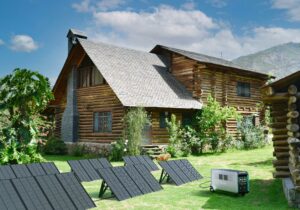
When choosing a reliable backup power solution, two options continue to dominate the conversation: solar power and generators. But which is actually better—solar or a generator? The answer depends on your electricity needs, budget, expected backup duration, available space, maintenance requirements, and how frequently you experience power interruptions.
For homeowners and businesses in Kenya, the decision has become even more important because electricity affordability, reliability, and energy independence are major considerations. Kenya has a strong renewable energy base, and solar is increasingly used for homes, businesses, off-grid applications, and backup power. The International Energy Agency reports that Kenya generated nearly 90% of its electricity from renewable sources in 2023, while solar-powered off-grid solutions have become an important part of electricity access.
From an expert’s perspective, however, solar vs generator is not simply a question of which equipment is cheaper to buy. The better comparison considers the total cost of ownership, including installation, fuel, maintenance, battery replacement, efficiency, reliability, and expected lifespan.
So, is solar better than a generator? In many residential and commercial applications, solar with adequate battery storage is the better long-term investment. However, generators still have important advantages, particularly where very high power is required for long periods or where the system must operate regardless of sunlight.
Let’s examine the two technologies in detail.
What Is the Difference Between Solar Power and a Generator?
Before comparing solar vs generator cost, reliability, and performance, it is important to understand how each system actually produces electricity.
A solar power system uses photovoltaic (PV) panels to convert sunlight into direct-current electricity. An inverter then converts the DC electricity into AC electricity that household and commercial appliances can use. If batteries are included, excess solar energy can be stored and used later when there is insufficient sunlight or when the grid goes down.
A generator, by contrast, normally uses an internal-combustion engine to drive an electrical generator. Standby generators can automatically start when grid electricity fails, using an automatic transfer switch to move the load from the grid to the generator. Generators may use diesel, petrol, natural gas, propane, or other fuels.
This fundamental difference explains much of the cost difference.
Solar uses sunlight as its energy source, while a generator continuously consumes fuel whenever its engine is running.
Solar vs Generator: Initial Installation Cost
One of the first questions customers ask is: “Which is cheaper, solar or a generator?”
The generator normally wins when comparing only the initial equipment purchase.
A relatively small generator can provide substantial power without requiring solar panels, mounting structures, batteries, or a large inverter. A complete solar system, on the other hand, may require:
– Solar panels
– Hybrid or solar inverter
– Battery bank
– Mounting structures
– DC and AC protection
– Cabling
– Earthing and surge protection
– Installation labour
– Monitoring equipment
The battery can be particularly important if the objective is backup power rather than simply reducing daytime electricity consumption.
The U.S. Department of Energy’s solar cost benchmarks similarly separate photovoltaic modules, inverters, energy storage, structural components, electrical components, and installation-related costs when evaluating the cost of a photovoltaic system.
Therefore, solar has a higher upfront investment in many applications. But this is where many comparisons stop too early.
A technician should never determine which system is better based solely on purchase price. The real question is: How much will the system cost to own and operate over several years?
That is where the economics start changing
Solar vs Generator Running Costs: Which Is Cheaper?
The difference between solar and generator running costs is one of the strongest arguments in favor of solar power.
Once a properly sized solar photovoltaic system is installed, sunlight itself does not have to be purchased every time the system generates electricity. The major operating expenses are generally maintenance, cleaning, monitoring, and eventual replacement of components.
A generator is different.
Every hour the generator operates creates fuel consumption and mechanical wear. Depending on the generator type and load, you also incur expenses for engine oil, oil filters, air filters, fuel filters, spark plugs on petrol units, servicing, and repairs.
This means a generator that looks inexpensive at the point of purchase can become expensive if it is used frequently.
For example, imagine a business that runs a generator for several hours every day. Even without calculating an exact fuel price, the operating principle is obvious: the more hours the generator runs, the more fuel it consumes and the more frequently it requires servicing.
Solar has the opposite economic characteristic. Its major expenditure is usually concentrated toward the beginning of the project, while its energy source—sunlight—is free.
The technician’s rule:
If you use backup power occasionally, a generator can be a cost-effective option.
If you have frequently depended on backup power for many years, solar-plus-battery deserves serious consideration because eliminating recurring fuel purchases can substantially reduce the total cost of ownership.
Solar vs Generator Maintenance Cost
Maintenance is another area where solar and generators differ fundamentally.
A generator contains an engine with moving mechanical components. Depending on the type, maintenance may involve oil changes, filters, belts, cooling systems, fuel systems, batteries, exhaust components, and other mechanical parts.
It should also be run and inspected periodically, even if it is rarely required during an actual outage.
Solar PV systems have far fewer moving parts. The main components—panels, wiring, mounting structures, inverter, and battery—are primarily electrical and electronic.
That does not mean solar is maintenance-free.
Panels may require cleaning; connections should be inspected; protective devices should be checked; and system performance should be monitored. Inverters and batteries also need appropriate attention.
The U.S. Department of Energy recommends preventive operation and maintenance for PV systems and notes that solar performance can vary due to weather, location, module aging, soiling, and severe weather events.
The major difference is therefore this:
Generator maintenance is mechanically intensive; solar maintenance is primarily electrical and preventive.
For households that want a low-maintenance backup power system, this gives solar a significant advantage.
Solar vs Generator Reliability During Power Outages
Reliability is more complicated than simply asking whether solar or a generator produces electricity.
A generator can operate day or night as long as it has sufficient fuel and is mechanically functional. This makes it extremely useful for prolonged outages and heavy loads.
Solar power depends on available sunlight.
During the day, panels can generate electricity. At night, they cannot generate solar energy, so a battery or another power source is required.
Cloudy weather can also reduce solar output. Solar generation is affected by factors such as clouds, dust, haze, rain, shadows, and time of day.
This is why a professional solar installation should not simply consist of “some panels on the roof.”
If the customer’s priority is backup power, the system should normally be designed around:
Solar panels + suitable inverter + adequate battery storage + correctly sized electrical protection.
Solar panels alone may not keep a house powered during a blackout. Grid-connected PV systems are generally designed to shut down when grid power fails unless they have the appropriate backup configuration.
A correctly designed solar-plus-storage system, however, can automatically provide backup power and continue supplying selected loads during an outage.
Solar vs Generator for Home Use
For a typical Kenyan home, the better option depends heavily on the appliances you want to operate.
A household that mainly needs lights, a Wi-Fi router, a television, Phones, Computers, a Fridge, and Small appliances may be an excellent candidate for a properly sized solar-and-battery system.
A household that wants to operate multiple high-power appliances simultaneously—such as large water heaters, electric cooking equipment, pumps, welding equipment, or several air conditioners—may require a significantly larger solar system and battery bank.
In such situations, the installation cost can increase substantially.
A generator may provide high instantaneous power at a lower initial cost, making it useful for demanding loads.
However, for everyday household backup, solar generally offers a more convenient experience because there is no fuel to purchase, transport, or store.
Solar vs Generator for Businesses
Businesses need to evaluate power backup differently because electricity interruptions can directly affect revenue.
A shop may need lights, refrigeration, security systems, and point-of-sale equipment. Similarly, a salon may require hair dryers, clippers, sterilizers, and other equipment.
An office may need computers, networking equipment, printers, and security systems.
A restaurant or hotel, on the other hand, may have substantially larger refrigeration and kitchen loads.
For businesses that experience frequent outages, running a generator each time the grid fails can lead to significant recurring fuel and maintenance expenses.
Solar with battery storage can reduce this dependence.
However, businesses should not automatically replace a generator with solar. For critical operations, a hybrid solar + battery + generator system can be technically superior.
Solar handles normal energy demand and routine outages, while the battery provides fast backup.
The generator serves as the emergency backup when the battery is depleted or demand exceeds the solar system’s designed capacity.
This approach provides redundancy rather than relying on a single power source.
Solar vs Generator Lifespan
Another important consideration is lifespan.
A quality solar system can remain productive for decades, although its output gradually decreases with age. The U.S. Department of Energy notes that many rooftop solar systems maintain at least 80% of their initial power output for at least 25 years.
However, a complete solar installation should not be viewed as a single component with a single lifespan. Solar panels, batteries, and inverters age differently.
The panels may continue producing electricity for many years, while an inverter may need to be replaced sooner. Batteries have their own cycle life and operating limits.
This is why a technician should discuss component lifespan rather than simply saying “solar lasts 25 years.”
Generators also have service lives that depend heavily on engine quality, operating hours, loading, servicing, and operating conditions.
A well-maintained commercial diesel generator can provide many years of service, but its long-term cost depends significantly on maintenance and fuel availability.
Solar vs Generator: Noise, Smoke, and Environmental Impact
This is one area where solar has an obvious practical advantage.
Solar panels generate electricity silently. There is no engine noise, exhaust smoke, or fuel combustion during normal operation.
Generators, especially conventional petrol and diesel models, produce engine noise and exhaust emissions.
For residential neighbourhoods, offices, schools, clinics, and other noise-sensitive locations, this can be an important consideration.
Kenya’s energy strategy is also increasingly focused on renewable energy. IRENA’s Kenya energy profile shows that the country’s electricity generation has a large share of renewables, while the IEA highlights Kenya’s strong renewable energy potential.
For a customer seeking clean, quiet, and low-intervention backup power, solar has a clear advantage.
Is Solar Better Than a Generator During Cloudy Weather?
This is one of the most common misconceptions about solar power. Solar panels do not suddenly stop working because there are clouds.
They can continue producing electricity under diffuse sunlight, although output may be significantly lower than under strong sunlight. Solar production varies according to sunlight intensity and other environmental conditions.
A properly sized battery can help compensate for periods when solar production falls.
However, during prolonged periods of poor solar availability, the battery can eventually discharge.
For customers who require guaranteed continuous power regardless of weather, a hybrid system incorporating a generator can provide an additional layer of security.
Solar + Generator: Is a Hybrid Backup System Better?
For many homes and businesses, the real answer to “solar vs generator—which is better?” is actually both.
A hybrid power system can be configured so that solar supplies energy whenever available, batteries handle short-term backup, and the generator starts when the battery reaches a predefined low state of charge or when the electrical demand becomes too high.
This arrangement combines the strengths of both technologies.
Solar reduces fuel consumption, while the battery provides fast, quiet backup power.
The generator provides extended backup when sunlight and stored energy are insufficient.
Energy storage is particularly important because it allows electricity generated during sunny periods to be used later. The U.S. Department of Energy explains that batteries can shift solar energy from periods of high generation to periods of high demand or low solar production.
For critical businesses, farms, clinics, hospitality facilities, and larger homes, this can be one of the most technically robust backup configurations.
Solar vs Generator in Kenya: Which Makes More Sense?
Kenya is particularly well-positioned for solar because of its strong solar resource and established off-grid solar market.
IRENA estimates East Africa has high annual average solar irradiation, while the IEA identifies Kenya as one of the most mature markets for solar off-grid solutions in the region.
This makes solar attractive for homes and businesses seeking energy independence.
However, good solar design is essential.
The system must be sized according to:
– Daily energy consumption
– Peak electrical load
– Required backup duration
– Solar resource
– Battery capacity
– Inverter output
– Appliance starting currents
– Future load growth
A common mistake is sizing solar panels based on the customer’s monthly electricity bill while ignoring the actual peak load and battery requirements.
A professional technician should perform a load assessment before recommending equipment.
The Final Verdict: Solar or Generator—Which Is Better?
So, which is better: solar or a generator?
There is no universal answer, but for most homes and businesses seeking frequent, long-term backup power, solar with battery storage is usually the stronger solution.
Solar wins on:
– Low ongoing energy costs
– No routine fuel purchases
– Quiet operation
– Low mechanical maintenance
– Renewable energy production
– Long-term energy independence
– Reduced exposure to fuel price increases
– Ability to operate with battery backup
Generators win on:
– Lower initial investment in many cases
– High continuous power output
– Ability to operate day or night
– Fast refueling
– Independence from sunlight
– Suitability for very heavy loads
The most important point is that solar should not be compared with a generator purely on purchase price.
Compare the total cost of ownership.
Calculate the equipment cost, installation, fuel, maintenance, battery replacement, inverter replacement, expected lifespan, and number of hours the system will operate each year.
For occasional emergency backup, a generator can remain practical.
For frequent outages and long-term energy savings, solar-plus-storage is usually more attractive.
For mission-critical applications, the best technical solution may be solar + battery + generator, where each technology performs the job it is best suited to perform.
Frequently Asked Questions About Solar vs Generator
1. Is solar cheaper than a generator?
Solar generally has a higher upfront installation cost but can have much lower operating costs because it does not require fuel for normal operation. The longer and more frequently the system is used, the more important the total cost of ownership becomes.
2. Can solar completely replace a generator?
Yes, for many homes and businesses, provided the solar panels, inverter, and battery are correctly sized for the required loads and backup duration. However, extremely high loads or prolonged periods of poor solar production may justify keeping a generator as secondary backup.
3. Which is more reliable, solar or a generator?
A generator can provide power regardless of sunlight as long as it has fuel and is operational. Solar-plus-battery systems can provide highly reliable backup but depend on adequate battery capacity, solar availability, and correctly configured equipment.
4. Does solar work during a power outage?
Solar panels alone generally do not guarantee backup power during a grid outage. A properly configured inverter and battery storage system is typically required for off-grid or backup operation.
5. Is solar worth it in Kenya?
For many Kenyan homes and businesses, solar can be a strong long-term investment because of the country’s solar resources and established solar market. The financial benefit depends on system size, electricity usage, equipment quality, installation cost, and the frequency with which backup power is required.
Choose Reliable Power with MK Homestyles
Whether you are considering solar power or a generator for your home, business, farm, or workplace, the most important decision is not simply choosing between solar and a generator—it is choosing a reliable power solution that matches your energy needs, budget, and lifestyle. At MK Homestyles, we make it easier to access dependable power solutions tailored to Kenya’s evolving electricity needs.
If you want clean, quiet, and low-cost energy, invest in a quality solar power system from MK Homestyles. If you need reliable backup power to handle demanding appliances and keep you running during prolonged outages, a reliable generator is an excellent choice. We offer practical solutions for home backup power, businesses, farms, shops, offices, and other applications, helping you reduce the inconvenience caused by power interruptions.
Don’t wait for the next blackout to expose the weaknesses of your current power setup. Get reliable solar panels, solar power systems, generators, and backup power solutions from MK Homestyles and enjoy greater energy security, convenience, and peace of mind. Whether you need an affordable home solar system, a powerful generator, a portable power solution, or a complete backup power system, MK Homestyles can help you choose the right solution for your requirements.
Ready to take control of your power?
Shop reliable solar and generators from MK Homestyles today and keep your home or business powered when you need it most. Choose dependable equipment, practical energy solutions, and quality products from a trusted Kenyan supplier. MK Homestyles — your reliable source for solar power systems, generators, and backup power solutions in Kenya.