
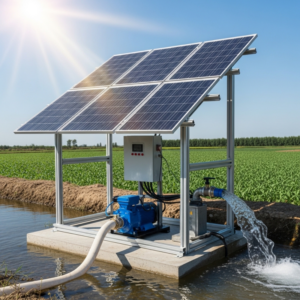
A solar water pump is a reliable and energy-efficient solution for supplying water to homes, farms, livestock, schools, and commercial properties. However, like any mechanical and electrical system, it can develop faults that interrupt the water supply. If your solar water pump has stopped working, is running without pumping water, or keeps switching off during operation, identifying the underlying cause is the first step towards restoring its performance.
So, what causes a solar water pump to stop working? A solar water pump can stop working due to insufficient solar power, faulty pump controllers, loose electrical connections, low borehole water levels, blocked pipes, damaged pump components, and overheating. In some cases, the pump itself may be functioning correctly, but the surrounding system is preventing it from delivering water.
For Kenyan homeowners and farmers who depend on solar-powered water pumping, understanding these problems can reduce downtime, prevent unnecessary repair costs, and extend the lifespan of the equipment.
This guide explains the most common solar water pump problems, how to troubleshoot them safely, and how to prevent recurring failures.
7 Common Reasons Why a Solar Water Pump May Stop Functioning
A solar water pump may stop working due to the following reasons:
1. Insufficient Sunlight or Solar Panel Power
One of the most common reasons a solar water pump stops working is inadequate electrical power from the solar panels. Unlike pumps connected to a stable electricity supply, solar pumps rely on sunlight unless the system includes an additional power source.
When sunlight is weak, panels are shaded, or the installation is incorrectly sized, the pump may fail to start, operate intermittently, or deliver less water than expected.
Common causes
– Heavy cloud cover or prolonged rainy weather.
– Dust, leaves, or bird droppings covering the solar panels.
– Trees, buildings, or other objects casting shadows on the panels.
– Damaged solar panels or electrical cables.
– Incorrect panel configuration for the pump controller.
How to solve the problem
Inspect the panels for dirt, shading, and visible damage. Clean them according to the manufacturer’s instructions, and ensure that nearby objects do not unnecessarily obstruct sunlight.
If the pump continues to perform poorly in good sunlight, a qualified technician should check the solar array’s voltage, current, and connections against the manufacturer’s specifications. The installed panels may be insufficient for the pump’s electrical requirements.
Remember that adding more panels is not always the correct solution. The panel arrangement must remain compatible with the controller’s permitted voltage and current limits.
2. Faulty Solar Pump Controller or Electrical Connections
The solar pump controller regulates the electrical power supplied to the pump and, depending on the model, manages motor operation and protective functions. A fault in this component can stop the entire pumping system even when the solar panels are generating sufficient power.
Loose terminals, damaged cables, moisture ingress, and incorrect wiring can also interrupt the electricity supply between the panels, controller, and pump.
Signs of controller or electrical problems
– The pump does not start despite adequate sunlight.
– The controller displays an error code or warning light.
– The pump starts and stops repeatedly.
– The controller shows abnormal voltage readings.
– The system trips or shuts down unexpectedly.
Troubleshooting steps
Start by checking the controller display and consulting the manufacturer’s manual for the meaning of any error codes. Visually inspect accessible cables and connectors for damage, corrosion or signs of overheating.
Electrical testing should be performed by a qualified technician using appropriate equipment. Do not open live electrical enclosures, handle exposed conductors or bypass protective devices.
If the controller is defective, it may need repair or replacement with a compatible unit. A replacement controller must match the pump’s electrical specifications, motor type, and protection requirements.
3. Low Borehole Water Levels or an Empty Water Source
Sometimes a solar water pump stops delivering water because there is insufficient water available at the source. This is particularly important for boreholes, wells, and reservoirs where water levels can change with seasonal conditions or heavy usage.
A borehole may have adequate water at the beginning of the day but experience a falling pumping water level as the pump continues to operate. If the water level falls below the pump’s safe operating limit, the pump may lose delivery or activate dry-run protection.
How to identify the problem
Look for a sudden reduction in water output, intermittent pumping, or a controller warning associated with low water levels. If the pump draws from an open reservoir or tank, check whether the source contains enough water.
For a borehole, a technician may need to measure the pumping water level and compare it with the pump’s installation depth and operating requirements.
Recommended solution
Allow the water source to recover before restarting the pump, where appropriate. Install or maintain a suitable low-water-level sensor or dry-run protection system to prevent operation when water levels are too low.
Do not assume that a pump has failed simply because it is no longer delivering water. In some cases, the actual problem is insufficient water at the source.
4. Blocked Pipes, Filters, or Pump Intakes
A solar water pump can run normally but deliver little or no water when the intake, filters, or delivery pipes are obstructed. Sediment, sand, mineral deposits, and debris can restrict water movement, reducing flow and increasing strain on the system.
Surface pumps may also lose their prime or struggle to draw water if there is an air leak in the suction line. Submersible pumps operate differently, so the appropriate checks depend on the pump design.
Common warning signs
– The pump runs but produces little or no water.
– Water pressure decreases gradually.
– The system delivers water intermittently.
– Filters or intake screens contain visible debris.
– The pump makes unusual noises or vibrates excessively.
How to fix the problem
Inspect accessible filters, valves, and pipes for blockages, leaks, or damage. Clean or replace filters according to the manufacturer’s maintenance schedule.
For a surface pump, check the suction line and priming arrangements specified by the manufacturer. For a submersible pump, inspection of the submerged intake or internal components may require professional removal.
Avoid running a pump dry while investigating a blockage. If the pump makes unusual noises or shows signs of mechanical strain, switch it off and arrange an inspection.
5. Solar Pump Motor Failure or Mechanical Damage
Although solar water pumps are designed for demanding operating conditions, their motors and hydraulic components can deteriorate over time. Sand abrasion, poor water quality, overheating, bearing wear and prolonged operation under unsuitable conditions can damage internal components.
The result may be a pump that hums without delivering water, trips repeatedly, produces unusual vibrations or fails to start.
What should you check?
First, establish whether the pump is receiving the correct electrical supply and whether the controller is reporting a fault. If the electrical supply is within specification but the pump still fails to operate correctly, mechanical damage may be responsible.
A qualified technician can inspect the motor, impeller, bearings, seals and other relevant components, depending on the pump design.
Repair or replacement?
Minor faults may be repairable, while extensive motor damage or severe internal wear may make replacement more economical. The decision should consider the pump’s age, repair cost, availability of replacement parts, and expected remaining service life.
Avoid repeatedly restarting a pump that is jammed or drawing abnormal current. Doing so can cause further damage.
6. Overheating and Dry-Run Protection
Modern solar water pumping systems may include protective features that shut down the pump when unsafe operating conditions are detected. These features are designed to prevent damage rather than indicate that the pump is necessarily defective.
Overheating can result from excessive electrical loading, inadequate cooling, mechanical resistance or operating conditions outside the manufacturer’s limits. Dry running occurs when the pump operates without an adequate water supply.
Some controllers also protect against overcurrent, undervoltage, overvoltage, and abnormal motor conditions.
What should you do?
Check the controller’s error indicators and consult the manufacturer’s instructions. If overheating is suspected, switch off the system and allow it to cool before further inspection.
If the pump has stopped because the water source is depleted, restore an adequate water supply before restarting it. Repeated overheating or dry-run warnings require investigation rather than repeated resetting.
Never bypass protective controls to force the pump to operate. The underlying fault must be corrected first.
7. Incorrect Pump Sizing or Excessive Pumping Head
A solar water pump may appear to be working but fail to deliver enough water because it is operating outside its intended performance range. This can happen when a pump is selected without accounting for borehole depth, tank elevation, pipe length or required water volume.
The key technical consideration is total dynamic head (TDH), which includes the vertical lift and friction losses through pipes and fittings. As the required head increases, the flow rate available from a pump generally decreases.
For example, a pump may deliver a high flow rate at a low pumping height but only a small flow rate when supplying a tank on a raised platform.
How to address the problem
Calculate the total dynamic head and compare it with the pump’s performance curve. Confirm that the pump can deliver the required flow rate at that operating point.
If the system is incorrectly sized, a suitable pump, pipework or solar array adjustment may be necessary. Simply purchasing a pump with a higher advertised wattage does not guarantee a better result.
How to Troubleshoot a Solar Water Pump That Is Not Working
A systematic inspection helps distinguish between simple operating problems and faults that require professional repair. Before replacing the pump, work through the following checks.
- Check sunlight: Confirm that the solar panels are receiving adequate sunlight and are not heavily shaded or dirty.
- Inspect the controller: Record error codes or warning indicators and consult the relevant manual.
- Check the water source: Ensure that the borehole, well or reservoir contains sufficient water.
- Inspect accessible pipes: Look for leaks, closed valves and obvious blockages.
- Review recent changes: Consider whether the problem started after maintenance, electrical work, heavy rainfall or a change in water demand.
- Arrange technical testing: If the cause remains unclear, have a qualified technician test the electrical supply, controller and pump performance.
Always isolate power before inspecting components that could expose you to electrical hazards. Solar panels can continue generating electricity in daylight, so electrical work should be carried out using appropriate isolation procedures.
How to Prevent Solar Water Pump Problems
Preventive maintenance is usually less expensive than dealing with an unexpected water supply failure. Regular inspections can identify developing faults before they cause prolonged downtime.
- Keep solar panels clean,
- Inspect accessible wiring and mounting hardware,
- Check pipes for leaks.
- Monitor changes in water output,
- Listen for unusual operating sounds
- Pay attention to controller warnings.
- Where water contains sand or sediment, suitable filtration and periodic inspection may help reduce wear.
- Ensure that the pump is correctly sized for the water source and delivery requirements, and that dry-run protection is functional where applicable.
The maintenance schedule should follow the manufacturer’s recommendations and account for the water quality and operating conditions. Professional servicing is particularly important for borehole pumps and installations where removing the pump requires specialist equipment.
Find Reliable Solar Water Pump Solutions at MK Homestyles
A solar water pump can stop working because of inadequate sunlight, faulty electrical connections, controller problems, low water levels, blocked pipes, mechanical damage, overheating or incorrect system sizing. Identifying the cause before replacing equipment can save money and help restore a reliable water supply.
If your solar pump continues to fail despite basic checks, consult a qualified technician to assess the complete system, including the solar panels, controller, pump and pipework.
Looking for reliable solar water pumps in Kenya? MK Homestyles offers solar and water-pumping solutions for homes, farms and businesses seeking dependable water supply systems. Explore MK Homestyles solar water pumps, solar borehole pumps and related solar equipment to find options suited to your water requirements.
Choose the right solar water pumping solution from MK Homestyles for your home or farm, and keep your water supply dependable with proper installation, correct sizing and regular maintenance.