
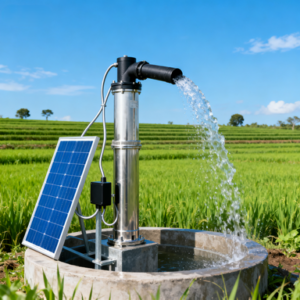
A solar water pump can be an excellent solution for supplying water to homes, farms, livestock, irrigation systems, and boreholes without relying entirely on grid electricity or fuel. However, like any electrical or mechanical system, a solar water pump can stop working when one or more components fail.
If your solar water pump is not working, the problem is not necessarily the pump motor itself. A solar pumping system typically consists of several interconnected components, including solar panels, cables, a pump controller, sensors, a pump, pipes, and water storage equipment. A fault anywhere in this chain can prevent the system from delivering water.
Kenya’s solar water pumping installations also commonly involve boreholes, elevated storage tanks, and long cable or pipe runs. The country’s Energy specifications for solar water pump systems emphasize correctly sized electrical connections, protection systems, and proper installation because these factors directly affect system reliability.
So, what causes a solar water pump to stop working? Below are the most common causes and how an experienced technician would approach the problem.
1. Insufficient Sunlight or Solar Power
One of the first things to check when a solar water pump stops working is whether the solar array is producing enough power.
Solar-direct pumping systems depend on the available solar energy. Early morning, late afternoon, heavy cloud cover, and poor weather can reduce the electrical power available to the controller. If the available voltage or power falls below the pump’s requirements, the controller may prevent the motor from starting.
Modern solar pump controllers can deliberately stop or reduce pump operation when solar irradiance is insufficient. Some systems automatically retry after a delay when sufficient sunlight returns.
However, don’t assume every power problem is caused by cloudy weather.
Dirty solar panels, partial shading, incorrect panel wiring, damaged cables, or an undersized solar array can produce similar symptoms.
What to check:
– Are the solar panels receiving direct sunlight?
– Are trees, buildings, or other structures casting shadows?
– Are the panels heavily covered with dust?
– Are all panel connections secure?
– Is the solar array correctly sized for the pump?
– Is the panel voltage within the controller’s required operating range?
Even partial shading can significantly affect some solar pumping systems. Manufacturer troubleshooting guidance specifically identifies shading, dirt, incorrect wiring, and undersized PV arrays as potential causes of low-power conditions.
2. The Solar Panels Are Dirty, Damaged, or Shaded
Solar panels don’t need to be completely covered in dirt for their performance to be affected. Dust, bird droppings, and other deposits can reduce the sunlight reaching the photovoltaic cells.
This can become particularly important in dusty environments and during prolonged dry periods.
Inspect the panels for:
– Dust accumulation
– Bird droppings
– Cracked glass
– Loose connectors
– Damaged cables
– Corrosion
– Shading from trees or new structures
Clean the panels according to the manufacturer’s instructions and make sure the mounting structure has not shifted.
A technician should also measure the PV voltage rather than simply looking at the panels. A panel can appear perfectly normal, yet a failed connector, cable, or wiring configuration can prevent adequate power from reaching the controller.
3. Low Water Level or Dry Running
Another major reason a solar water pump is not pumping water is insufficient water at the source.
This is particularly common with borehole systems. During periods of heavy water use or drought, the groundwater level can fall below the pump intake. A properly protected system should detect this condition and stop the pump rather than allowing it to continue running without water.
Dry running is dangerous because water normally helps cool and lubricate components within many pumping systems.
Solar pump manufacturers, therefore, commonly provide dry-run protection or recommend appropriate water-level sensors.
If the controller displays a dry-run or low-water warning, don’t immediately assume the pump is faulty. First, check the actual water level in the borehole, well, or reservoir.
Also, check whether the water-level sensor or probe is working correctly.
4. Faulty Solar Pump Controller
The controller is one of the most important components in a solar pumping system. It manages the electrical power supplied to the pump and may protect against conditions such as under-voltage, over-voltage, overload, overheating, and dry running.
Kenya’s specifications for solar borehole pump systems, for example, include protection against dry running, undervoltage, overvoltage, overload, and overtemperature.
If the solar pump controller is faulty, the pump may:
– Fail to start completely
– Start and stop repeatedly
– Show an error code
– Run only during strong sunlight
– Shut down after running for a short period
– Operate but produce little or no water
Look at the controller’s display or indicator lights before resetting anything. The error code can provide an important clue.
A controller that becomes excessively hot may also reduce pump power or temporarily shut down the system to allow it to cool.
5. Damaged or Loose Wiring and Connections
Electrical connections are another common source of problems with solar water pumps.
A solar pump may have relatively long cable runs between the PV array, controller, and submersible pump. Loose terminals, damaged insulation, corrosion, water ingress, or incorrectly sized cables can cause voltage drop and prevent the motor from receiving adequate power.
This is especially important after installation work, storms, or physical damage around the solar array.
Inspect visible wiring for:
– Loose terminals
– Burn marks
– Corrosion
– Cuts or damaged insulation
– Water entering connectors
– Rodent or animal damage
– Incorrect cable connections
Manufacturer troubleshooting documentation identifies incorrect or failed connections as common causes of solar pump problems, particularly in new installations.
Important: Do not open electrical equipment or handle live DC wiring unless you are qualified to do so. Solar panels can produce dangerous voltages when exposed to sunlight.
6. Blocked Pump, Pipe, or Hose
Sometimes the pump is actually running, but no water reaches the tank.
This can happen when the pump inlet, filter, pipe, or hose becomes blocked. Sand, silt, debris, and mineral deposits can restrict water flow.
A kinked or crushed discharge pipe can cause a similar problem.
The result may be a pump that sounds like it is operating normally but delivers little or no water.
When troubleshooting a solar pump running but not pumping water, inspect the complete hydraulic path:
Water source → pump → rising main → valves → discharge pipe → tank.
Check for closed valves, blocked filters, kinked pipes, and obstructions.
Pump manufacturers specifically identify blocked pump ends and blocked or kinked pipework among the causes of low-power and overload conditions.
7. The Pump Is Working Against Excessive Head
A pump doesn’t simply need to lift water from one point to another. It must overcome the total dynamic head, which includes the vertical lifting distance as well as friction losses through pipes, fittings, and valves.
If the required head exceeds the pump’s practical operating capability, the pump may run without delivering the expected flow.
This can happen after:
– Extending a pipeline
– Raising a storage tank
– Installing smaller-diameter pipes
– Adding many bends or valves
– Increasing the pumping depth
– Replacing the original pump with an incorrectly sized model
For centrifugal solar pumps, insufficient available power can also prevent the motor from reaching the speed needed to overcome the total dynamic head, resulting in zero or very low flow.
Therefore, choosing a pump based only on horsepower is not enough. The technician should consider flow rate, total head, borehole depth, water level, pipe diameter, and required daily water volume.
8. Overheating or Pump Overload
A solar water pump may stop because its protection system detects excessive temperature or electrical load.
Possible causes include:
– Blocked pump
– Restricted pipework
– Incorrect pump sizing
– Mechanical resistance
– Excessive water temperature
– Controller overheating
– Electrical faults
A controller can automatically reduce power or shut the pump down when its temperature becomes too high. Normal operation may resume after the controller cools.
Repeated overheating should not simply be solved by repeatedly switching the system back on. The underlying cause needs to be identified.
9. Full Water Tank or Faulty Float Switch
Some solar pumping systems are designed to stop automatically when the storage tank is full.
A float switch, level sensor, or tank-control device can tell the controller when to stop pumping.
This is normally a useful protection feature, not a fault.
However, a damaged, incorrectly positioned, or stuck float switch can cause the controller to think the tank is full when it isn’t.
Check the tank level and inspect the float switch or level sensor if your system has one. Manufacturer documentation confirms that remote tank switches can intentionally stop a pump when the tank is full.
10. The Pump Motor or Mechanical Components Have Failed
If the solar panels, controller, wiring, water supply, and pipework all test correctly, the pump itself may have developed a mechanical or electrical fault.
Possible problems include:
– Motor failure
– Damaged impeller
– Worn bearings or mechanical components
– Internal blockage
– Damaged motor cable
– Water ingress
– Excessive sand exposure
At this point, professional testing is recommended. Pulling a submersible pump from a deep borehole should not be treated as a first-line troubleshooting step, as it may require specialized equipment and can damage the installation if done incorrectly.
How to Troubleshoot a Solar Water Pump That Is Not Working
A systematic approach is much better than randomly replacing components.
Start with these checks:
Step 1: Check whether there is sufficient sunlight.
Step 2: Inspect the solar panels for dirt and shading.
Step 3: Check the controller for error codes or warning lights.
Step 4: Confirm that the water source has sufficient water.
Step 5: Check visible cables and connections for damage.
Step 6: Check whether the tank is full or a float switch has activated.
Step 7: Inspect valves, filters, pipes, and hoses for blockages.
Step 8: Confirm that the pump is correctly sized for the required head and flow.
Step 9: Have a qualified technician test the system voltage, current, and controller output.
Step 10: If the electrical and hydraulic systems are functioning correctly, investigate the pump motor itself.
Never bypass dry-run, overload, or over-temperature protection simply to force the pump to operate. These protection systems exist to prevent expensive damage.
How to Prevent Solar Water Pump Problems
Good maintenance can prevent many solar water pump failures before they become expensive repairs.
Keep solar panels clean and free from shading. Inspect cables and connectors periodically, especially after storms. Check the water level in the borehole or storage source and monitor changes in pumping performance.
It is also important to keep filters and pipework clean and ensure valves are functioning correctly.
Most importantly, have the original system properly designed. A solar water pump should be selected based on the required flow, total head, available solar energy, and water source—not simply by choosing the highest available horsepower.
For borehole installations, professional commissioning and user training are also important. Kenya’s public solar pumping specifications emphasize training users on system performance, limitations, and routine maintenance.
Final Verdict
When a solar water pump stops working, the pump itself is not always the culprit. Insufficient sunlight, dirty or shaded solar panels, low water levels, faulty controllers, loose wiring, blocked pipes, excessive pumping head, overheating, and faulty sensors can all prevent a solar pumping system from operating correctly.
The best troubleshooting method is to work systematically from the solar power source to the controller, pump, water source, and delivery system. This prevents unnecessary replacement of expensive components and makes it easier to identify the actual fault.
For homes, farms, boreholes, and irrigation systems in Kenya, investing in the correct pump size, quality installation, and regular maintenance can significantly improve reliability and extend the useful life of the entire solar water pumping system.
Buy a Reliable Solar Water Pump From MK Homestyles
If you’re looking for reliable solar water pumps in Kenya for boreholes, farms, irrigation, or water tanks, choose a system that is properly matched to your required flow rate, pumping head, and available solar power. At MK Homestyles, you can explore solar water pumping solutions designed for practical water-supply applications and get guidance on selecting the right equipment for your installation.