
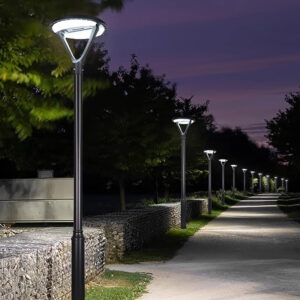
A properly installed solar streetlight should collect solar energy during the day, store that energy in its battery, and use it to power the LED light after sunset. Depending on its battery capacity, solar panel size, lighting mode, and weather conditions, a quality solar streetlight can provide illumination for many hours throughout the night.
However, one of the most common complaints from solar lighting users is: “Why does my solar streetlight turn off early?”
You may notice that the light works normally after sunset but becomes dim or switches off after only a few hours, even though it is supposed to operate until morning. In some cases, the problem may be caused by inadequate charging. In others, the battery may be deteriorating, the lighting mode may be incorrectly configured, or the system may be consuming more energy than expected.
The good news is that troubleshooting solar streetlights does not have to start with replacing expensive components. An experienced technician will normally diagnose the system step by step, starting with the simplest and most common causes.
How Does a Solar Streetlight Work?
Before diagnosing why a solar streetlight turns off early, it is useful to understand how the system manages energy. A solar streetlight is essentially a small off-grid solar power system designed specifically for outdoor lighting.
During daylight hours, the photovoltaic solar panel converts sunlight into electrical energy. A charge controller regulates that energy and directs it to the rechargeable battery. After sunset, the controller detects darkness and supplies energy from the stored battery to the LED light.
The basic energy cycle is:
Sunlight → Solar Panel → Charge Controller → Battery → LED Light
The light may also have a dusk-to-dawn sensor, motion sensor, radar sensor, timer, or intelligent lighting controller that determines how much energy the LED uses at night.
Therefore, if your solar streetlight stops working before sunrise, the issue may lie at several points within this system.
1. The Battery May Not Have Enough Stored Energy
One of the first things to investigate when a solar streetlight battery is not lasting is the amount of energy stored during the day.
The battery is effectively the fuel tank of the lighting system. If it does not receive enough energy during the day, there may not be enough power to keep the LED running throughout the night.
For example, if the solar panel normally needs several hours of strong sunlight to fully charge the battery, but the panel receives only limited sunlight, the battery may start the evening partially charged.
The light can then work normally for a few hours before the battery voltage falls to the controller’s minimum operating level.
How Do You Know the Battery May Be the Problem?
Several symptoms can indicate a battery-related problem:
– The streetlight turns off after only a few hours.
– The light becomes noticeably dim before switching off.
– Runtime has gradually decreased over several months.
– The light works normally after several sunny days but poorly after cloudy weather.
– The battery does not appear to hold its charge.
– The streetlight starts normally but shuts down well before sunrise.
If these symptoms persist even when the solar panel receives strong sunlight, the battery should be tested.
2. The Solar Panel Is Not Charging the Battery Fully
A healthy battery cannot compensate for insufficient solar charging. This is why solar streetlights not charging properly is another important area to investigate.
The solar panel needs sufficient sunlight during the day to replenish the energy consumed during the previous night.
A panel shaded by trees, buildings, walls, or other structures may produce significantly less energy than expected.
- Check the Solar Panel’s Sunlight Exposure
- Look at the panel throughout the day rather than checking it only once.
- Does a tree cast a shadow across it in the morning?
- Does a nearby building cast a shadow on it in the afternoon?
Is the panel installed underneath a roof or structure?
Even if the LED light is positioned perfectly to illuminate a road or compound, the panel itself may be poorly positioned for solar charging.
For reliable solar streetlight charging, the panel should have good exposure to available sunlight for as much of the day as possible.
3. A Dirty Solar Panel Can Reduce Charging Performance
Another simple but frequently overlooked cause is dirt.
Solar streetlights are installed outdoors where their panels are exposed to dust, pollen, bird droppings, mud, and other contaminants. A layer of dirt can reduce the amount of sunlight reaching the photovoltaic cells.
This is particularly relevant for solar streetlights in Kenya, where dust can accumulate quickly in some locations, especially near unpaved roads, construction areas, and farms.
How Should You Maintain the Panel?
Inspect the panel periodically and clean it with a soft cloth and clean water as needed.
Do not use abrasive materials that could scratch the panel surface.
If the streetlight suddenly begins operating for longer after the panel has been cleaned, poor panel cleanliness may have contributed to the charging problem.
4. Cloudy and Rainy Weather Can Affect Runtime
If your solar streetlight performs well during sunny periods but turns off before morning during the rainy season, weather conditions should be considered.
Solar panels can still generate electricity when the sky is cloudy, but energy production is generally lower than under strong direct sunlight.
Several consecutive days of cloudy or rainy weather can therefore leave the battery with less stored energy.
This explains why a solar streetlight may operate all night after several sunny days but turn off early following prolonged poor weather.
What Should You Do During Cloudy Weather?
There is usually no immediate need for repair if the system returns to normal after several sunny days.
Instead, check that:
– The panel is clean.
– Nothing is shading it.
– The panel is correctly positioned.
– The battery is healthy.
– The lighting settings are not consuming excessive energy.
If early shutdown continues even after good weather returns, further troubleshooting is necessary.
5. The Battery May Be Old or Damaged
Even when the solar panel is working properly, a failing battery can cause a solar streetlight to shut off after a few hours.
Rechargeable batteries lose capacity over time as they go through repeated charging and discharging cycles. A battery that originally stored enough energy for an entire night may eventually hold considerably less.
For example, a streetlight might have operated for 10–12 hours when new but gradually reduce to six or seven hours as the battery deteriorates.
Should You Replace the Battery?
Do not replace the battery simply because the light turns off early.
First, confirm that the solar panel is producing sufficient charging power and that the controller and wiring are functioning correctly.
If those components are healthy and the battery cannot retain sufficient charge, replacement may be appropriate.
Always use a battery with the correct chemistry, voltage, and capacity specified for the solar streetlight.
6. The Lighting Mode May Be Consuming Too Much Power
Modern solar streetlights are often more intelligent than older models. They may include multiple brightness levels, timers, motion sensors, and radar sensors.
If the light is configured to operate continuously at maximum brightness, it will consume considerably more energy than a system that reduces brightness when there is no activity.
This can result in a solar streetlight battery draining quickly.
Check the Lighting Settings
If your model has different operating modes, check whether it supports:
– Full brightness throughout the night
– Reduced brightness after a certain period
– Motion-activated full brightness
– Timer-controlled operation
– Automatic dusk-to-dawn lighting
For roads, compounds, gates, and parking areas, intelligent lighting can help balance visibility with battery consumption.
7. A Motion or Radar Sensor May Be Configured Incorrectly
A motion-sensor solar streetlight is designed to conserve energy by dimming when there is no movement.
However, incorrect sensor settings can cause the light to operate at high brightness more frequently than intended.
For example, a streetlight installed near a busy road may detect frequent movement throughout the night. If every detection causes the LED to operate at maximum brightness for extended periods, the battery can discharge faster than expected.
This is why motion sensor settings should be considered when diagnosing short runtime.
8. The Solar Streetlight Controller May Have a Problem
The charge controller, or integrated lighting controller, manages the flow of electricity between the solar panel, battery, and LED.
A controller fault can cause incorrect charging, premature low-voltage shutdown, or unusual lighting behavior.
If the panel and battery appear healthy but the system still shuts down early, the controller should be professionally tested.
Why Should You Avoid Guessing?
Replacing a battery when the controller is faulty will not solve the underlying problem.
Likewise, replacing the solar panel when the battery is defective is a waste of money.
A technician should ideally test the system in sequence:
Solar panel → Charging voltage → Controller → Battery → LED load → Sensors/settings
This systematic approach makes troubleshooting solar streetlights much more accurate.
9. The LED Light May Be Consuming More Energy Than Expected
The LED is the main electrical load in the system.
If the LED or driver develops a fault, it may consume abnormal amounts of power. Alternatively, a higher-power replacement LED may have been installed without upgrading the battery and solar panel.
The result can be a streetlight that works brightly at first but loses power at night and shuts down prematurely.
When replacing components, ensure that the LED power rating matches the original system specifications.
How to Make a Solar Streetlight Stay On All Night
If your goal is to keep your solar streetlight on all night, the solution isn’t necessarily to install a larger battery immediately.
Start by improving the entire energy balance. Ensure the solar panel receives sufficient sunlight, keep it clean, verify that the battery is healthy, select an appropriate lighting mode, and make sure the controller is functioning correctly.
If the lighting requirement has increased, a larger battery and appropriately sized solar panel may eventually be necessary.
The system must be designed so that the energy collected during the day is sufficient to meet the expected nighttime load.
How Long Should a Solar Streetlight Stay On?
There is no single runtime that applies to every solar streetlight.
Operating time depends on:
– Battery capacity
– Solar panel capacity
– LED wattage
– Solar radiation
– Weather
– Installation location
– Lighting mode
– Motion-sensor activity
– Battery condition
– Controller efficiency
A high-quality solar streetlight designed for dusk-to-dawn operation should be capable of providing its specified runtime under appropriate conditions. However, performance can vary during extended periods of poor weather or when components deteriorate.
This is why advertised wattage alone should not be used to judge the quality of a solar streetlight in Kenya.
How to Prevent Solar Streetlight Runtime Problems
Prevention begins with proper installation and regular maintenance.
Keep the solar panel clean and free from shading. Inspect the system periodically for damaged cables, loose connections, corrosion, or physical damage.
Pay attention to changes in nighttime performance. A gradual reduction in runtime can be an early indication of battery deterioration.
It is also important to install the streetlight in a location where the solar panel can receive adequate sunlight, rather than choosing a location solely for convenience.
Frequently Asked Questions
1. Why does my solar streetlight turn off before morning?
The most common causes are insufficient battery charge, inadequate sunlight, a dirty or shaded solar panel, an aging battery, excessive LED power consumption, or incorrect lighting settings.
2. Why does my solar streetlight turn off after a few hours?
If the battery does not have enough stored energy to meet the nighttime load, the controller may shut the light down when the battery reaches its low-voltage protection level.
3. How do I know if my solar streetlight battery is bad?
A battery may be deteriorating if nighttime runtime has progressively decreased despite adequate sunlight and proper charging. Professional voltage and capacity testing can confirm its condition.
4. Does cloudy weather affect the performance of solar streetlights?
Yes. Cloudy and rainy conditions can reduce the amount of solar energy collected during the day. Several consecutive days of poor weather can significantly reduce nighttime runtime.
5. How can I make my solar streetlight last longer at night?
Keep the panel clean and unshaded, maintain a healthy battery, and use an appropriate brightness or motion-sensor setting. If the system is undersized for the required load, the solar panel and battery may need to be upgraded.
Final Expert Advice
When a solar streetlight turns off early, resist the temptation to replace the battery immediately. Start with the basics: check sunlight exposure, inspect and clean the solar panel, examine the battery condition, and review the lighting settings.
If the problem continues, test the solar panel output, charging circuit, controller, and battery systematically.
The key is to understand the energy balance. Your streetlight can operate only at night if the energy collected during the day is sufficient to replace the energy consumed after sunset.
For property owners, farms, businesses, estates, and outdoor spaces, investing in a correctly sized and properly installed solar streetlight is just as important as choosing a product with impressive specifications.
Get Reliable Solar Streetlights in Kenya from MK Homestyles
If your current solar streetlight repeatedly turns off before morning, upgrading to a properly designed and reliable system can make a significant difference.
MK Homestyles provides practical solar lighting solutions for Kenyan homes, businesses, farms, compounds, gates, parking areas, pathways, and other outdoor spaces. Whether you are looking for solar streetlights in Kenya, solar floodlights, solar security lights, outdoor solar lighting, or dependable solar energy products, choosing the right system for your application is essential.
At MK Homestyles, we focus on reliable solar streetlights in Kenya, quality solar lighting solutions, and practical products designed to provide dependable outdoor illumination. If you need to buy solar streetlights in Kenya for your home, business, farm, estate, gate, or parking area, choose a solution that combines adequate solar charging, reliable battery storage, and efficient LED lighting.
Contact MK Homestyles for reliable solar streetlights, solar floodlights, and solar lighting solutions in Kenya—and get the right solar lighting system for your property.