
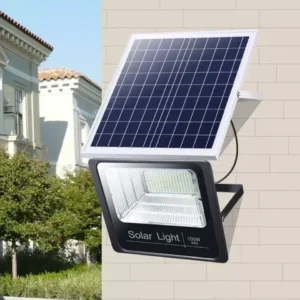
Solar floodlights are designed to provide bright outdoor lighting without relying on mains electricity. They use a solar panel to convert sunlight into electrical energy, store that energy in a rechargeable battery, and then use the stored power to operate the LED light after dark. When everything is working correctly, the system charges during daylight and automatically switches on when the light sensor detects darkness.
However, if your solar floodlight is not charging, stops working at night, becomes noticeably dimmer, or only operates for a short time, there is usually an identifiable problem within the charging system. The issue could be as simple as dirt on the solar panel or incorrect installation. Still, it can also indicate a damaged solar panel, faulty wiring, a failing battery, or a defective charging circuit.
Understanding how these components work together makes solar floodlight troubleshooting much easier.
How Does a Solar Floodlight Charge?
Before troubleshooting a solar light that is not charging, it is important to understand the basic charging process. The solar panel captures sunlight and converts it into electrical energy. That energy is regulated by the internal charging electronics before being stored in the rechargeable battery.
The US Department of Energy explains that photovoltaic cells absorb solar radiation and convert it into electrical energy.
During the day, the basic sequence is:
Sunlight → Solar Panel → Charging Circuit → Rechargeable Battery → LED Light
At night, the stored battery energy powers the LEDs. A light sensor or controller determines when the floodlight should switch on.
This means that a problem anywhere along this chain can result in a solar floodlight not charging.
1. The Solar Panel Is Not Receiving Enough Sunlight
One of the first things to check when troubleshooting a solar floodlight battery that is not charging is the solar panel.
A solar panel cannot charge effectively if it is positioned where it receives inadequate sunlight. Although solar panels can still generate electricity under cloudy conditions, reduced solar irradiance means less energy is available for charging.
The U.S. Department of Energy notes that actual solar production varies with sunlight availability, time of day, season, cloud cover and the angle at which sunlight reaches the panel.
Check for Shade
Look around the solar panel during the day. Trees, walls, buildings, roofing structures and even other parts of a property can cast shadows over the panel.
Partial shading can significantly reduce photovoltaic production. Research has documented measurable energy losses associated with partial shading in photovoltaic installations.
If possible, relocate or reposition the solar panel so it receives strong, unobstructed sunlight for much of the day.
Check the Panel’s Position
A solar floodlight installed under a roof or inside a covered veranda may look perfectly positioned for lighting purposes, but still have poor charging performance.
Remember: the best location for the light is not always the best location for the solar panel.
2. The Solar Panel Is Dirty
A surprisingly common cause of solar lights not charging is a dirty solar panel.
Dust, mud, bird droppings, leaves and other outdoor contaminants can reduce the amount of sunlight reaching the photovoltaic cells.
This is particularly important for solar floodlights installed near dusty roads, farms, construction sites and busy compounds.
How to Clean a Solar Floodlight Panel
- Switch the unit off if the manufacturer’s instructions recommend doing so.
- Wipe the panel gently using a soft, clean cloth and, where appropriate, clean water.
- Avoid aggressive chemicals, abrasive materials and rough scrubbing because the panel surface can be damaged.
- After cleaning, allow the panel to receive direct sunlight and monitor whether charging improves.
3. The Solar Floodlight Battery Is Worn Out
If the solar panel receives plenty of sunlight but the floodlight still does not hold enough power, the rechargeable battery may be the problem.
This is particularly likely when a solar floodlight stops working after several months or years of use or when it previously worked normally but gradually began operating for shorter periods.
A failing battery may show symptoms such as:
– The floodlight works for only a few hours.
– The light becomes dim very quickly.
– The light switches off shortly after sunset.
– The battery appears to charge, but does not retain energy.
– The floodlight stops working completely.
Rechargeable batteries have a finite service life, and proper charging and storage practices are important for maintaining battery performance. Battery manufacturers also recommend following the specific charging and handling instructions supplied with the product.
Can You Replace a Solar Floodlight Battery?
Some solar floodlights have replaceable batteries, while others use sealed battery compartments.
If replacement is possible, use the correct battery chemistry, voltage, capacity and physical size specified by the manufacturer. Do not randomly substitute a battery simply because it fits inside the housing.
If you are unsure, have the battery tested by a qualified technician.
4. The Solar Panel or Charging Circuit Is Faulty
If cleaning the panel and improving sunlight exposure do not solve the problem, the next step is to investigate the electrical charging system.
A damaged photovoltaic panel may produce insufficient voltage or current. The charging controller or internal electronics can also develop faults.
Technicians can use a multimeter to check whether the solar panel is producing an appropriate voltage under sunlight and whether that energy is reaching the battery charging circuit.
For larger solar systems, voltage testing is a standard troubleshooting method for checking panel and battery conditions.
Important: Do not open a sealed solar floodlight unnecessarily. If the unit is under warranty or contains a lithium battery, professional inspection is safer than attempting internal repairs.
5. Damaged or Loose Wiring Can Stop Charging
The solar panel, battery and control electronics must have reliable electrical connections.
A loose connector, damaged cable, corroded terminal or broken wire can interrupt the charging path.
Outdoor solar floodlights are exposed to rain, dust, heat and physical movement, so wiring and connectors can deteriorate over time.
What Should You Check?
Look for:
– Loose connectors
– Cut or damaged cables
– Corrosion
– Water intrusion
– Burn marks
– Broken terminals
– Rodent damage
– Poorly connected plugs
Do not simply replace a fuse or reconnect a wire without determining why the fault occurred. Proper troubleshooting focuses on identifying the underlying cause rather than repeatedly resetting or replacing protective components.
6. Cloudy or Rainy Weather Can Reduce Charging
Another reason people ask “why is my solar floodlight not charging during the day?” is prolonged cloudy or rainy weather.
Solar panels do not require perfect sunshine to generate electricity, but cloudy conditions generally reduce the amount of solar energy available for charging.
After several consecutive days of poor weather, the battery may not receive enough energy to recharge fully.
This can make the floodlight appear faulty even though the system is operating normally.
What Should You Do?
Give the solar floodlight several good daylight cycles after the weather improves. Ensure that the panel is clean and unobstructed so it can take maximum advantage of available sunlight.
7. The Floodlight May Be in the Wrong Operating Mode
Not every charging problem is an actual charging problem.
Some solar floodlights have ON/OFF switches, remote controls, brightness settings, motion-sensor modes or different operating modes.
If the unit has been switched off, incorrectly configured or placed in a special mode, it may not behave as expected at night.
Check the manufacturer’s instructions and confirm that:
– The main switch is ON.
– The remote control is functioning.
– The correct lighting mode is selected.
– The motion sensor is enabled if applicable.
– The battery compartment is properly connected.
– The panel is connected correctly.
8. The Light Sensor or Motion Sensor May Be Misbehaving
Modern solar security lights often include dusk-to-dawn sensors or motion detection.
The charging system may be working perfectly, while the sensor prevents the light from operating correctly.
For example, if the light sensor is covered, damaged or receiving unexpected light from another source, the floodlight may not switch on when you expect it to.
Likewise, a motion-sensor solar floodlight may remain dim or operate differently depending on its detection settings.
This is why troubleshooting should separate the charging problem from the lighting-control problem.
How to Tell If Your Solar Floodlight Is Actually Charging
If you are asking, “How do I know if my solar floodlight is charging?”, start with the easiest checks.
First, inspect the solar panel during daylight. Make sure it is clean and receiving direct sunlight.
If your model has a charging indicator, check whether the indicator changes when the panel is exposed to sunlight. Some models include a battery or charging-status indicator, although the exact behaviour varies by manufacturer.
For a more technical diagnosis, a technician can measure the panel’s output and battery voltage with a suitable multimeter.
A useful diagnostic sequence is:
Panel output → Wiring → Charging circuit → Battery → LED/control circuit
This approach prevents unnecessary replacement of components.
How to Fix a Solar Floodlight That Won’t Charge
Once the cause has been identified, the solution is usually straightforward.
If the panel is dirty, clean the solar panel and keep it free from dust and debris.
If the Panel Is Shaded: Move or reposition the panel to receive more direct sunlight.
If the Battery Is Faulty: Replace it with the correct manufacturer-approved battery where the design permits replacement.
If Wiring Is Damaged: Repair or replace damaged wiring and connectors using suitable outdoor-rated components.
If the Solar Panel Is Faulty: Have the panel tested and replace it if it cannot produce the required electrical output.
If the internal controller is faulty, a professional diagnosis may be required because the charging electronics are normally integrated inside the floodlight.
How to Prevent Solar Floodlight Charging Problems
Prevention is cheaper than repeated repairs. A good solar lighting maintenance routine can significantly improve reliability.
Keep the solar panel clean, periodically inspect cables and connectors, remove vegetation that creates shade and check the floodlight after periods of extreme weather.
Also, pay attention to the installation location. A solar floodlight installed where the panel receives consistent sunlight will generally perform better than one installed where the panel spends much of the day shaded.
Good operation and maintenance practices are an important part of maintaining photovoltaic system performance over time.
When Should You Replace Your Solar Floodlight?
If the solar floodlight is relatively new, troubleshooting and repair may be worthwhile.
However, replacement may make more sense when the panel, battery and electronics have deteriorated together, replacement parts are unavailable, the housing has suffered significant water damage, or repair costs approach the price of a new unit.
When buying a replacement, consider more than advertised brightness. Look at battery capacity, solar-panel size, charging performance, waterproof rating, sensor functionality, installation method and warranty.
A quality solar floodlight in Kenya should be selected according to the actual lighting requirement, installation location and available sunlight—not simply the largest wattage printed on the packaging.
Frequently Asked Questions About Solar Floodlights
Understanding the answers to common questions can help you diagnose simple problems before calling a technician.
1. Why is my solar floodlight not charging?
The most common possibilities include inadequate sunlight, shade, a dirty panel, damaged wiring, a faulty charging circuit or a worn-out battery.
2. Why is my solar light not charging in the sun?
Check whether the panel is actually receiving unobstructed sunlight. If it is clean and exposed to strong sunlight, but the battery still does not charge, the panel, wiring, charging controller, or battery may need testing.
3. Can a solar floodlight charge on a cloudy day?
Yes. Solar panels can still generate electricity in cloudy conditions, but the available energy is generally lower than under strong direct sunlight. Extended cloudy weather can therefore reduce the amount of energy stored in the battery.
4. How do I know if my solar floodlight battery is bad?
A battery that charges poorly, loses its charge quickly, causes very short operating times or has significantly reduced performance compared with when it was new may need testing or replacement.
5. How long does a solar floodlight battery last?
Battery lifespan varies considerably depending on battery chemistry, quality, temperature, charging cycles, usage and the manufacturer’s design. If the runtime has progressively declined despite good sunlight and a clean panel, battery deterioration is one possibility.
Final Technician’s Advice
When a solar floodlight is not charging, don’t immediately assume that the battery is dead. Start with the simplest possibilities: sunlight, shade, dirt, switches and connections. Then move toward electrical testing of the solar panel, charging circuit and battery.
The most important principle is to troubleshoot the system in sequence rather than replacing components unthinkingly.
A properly installed and maintained solar floodlight can provide dependable outdoor lighting for compounds, gates, driveways, farms, pathways, parking areas and business premises while reducing dependence on grid electricity.
Looking for Reliable Solar Floodlights in Kenya?
If you are experiencing repeated charging problems because of poor-quality equipment, it may be time to upgrade to a more dependable solar lighting solution.
At MK Homestyles, we help Kenyan homeowners, businesses, farms and property owners find reliable solar floodlights, solar street lights, solar security lights and outdoor solar lighting solutions suited to different applications. Whether you need a solar floodlight in Kenya for your compound, gate, driveway, farm, parking area or business premises, choosing the right equipment and installing it correctly can make a major difference in long-term performance.
For reliable solar lights in Kenya, quality solar floodlights, solar streetlights and practical solar energy solutions, contact MK Homestyles. Get the right solar lighting solution for your property and enjoy dependable outdoor illumination without unnecessary electricity costs.