
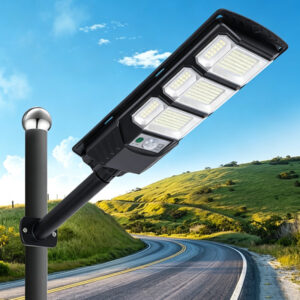
A solar floodlight that switches off before morning can leave your compound, gate, driveway, or business premises in darkness when you need security lighting the most. If your solar floodlight is not staying on at night, the problem may be caused by a weak battery, insufficient daytime charging, incorrect sensor settings, excessive brightness, or a fault in the lighting system.
Solar floodlights are designed to store energy from sunlight during the day and use it after sunset. However, the number of hours your light operates depends on its battery capacity, solar panel performance, brightness settings, weather conditions, and overall quality.
In Kenya, where cloudy weather, dust, and changing sunlight conditions can affect solar charging, understanding these factors is essential for maintaining reliable outdoor lighting. This expert guide explains why a solar floodlight keeps turning off at night, how to identify the cause, and what you can do to improve its runtime.
1. A Weak or Degraded Solar Floodlight Battery
The battery is one of the first components to investigate when a solar security light switches off after only a few hours. It stores the electricity generated by the solar panel during the day and supplies power to the LED floodlight at night.
Over time, rechargeable batteries lose some of their ability to hold a charge. A battery that once powered your floodlight until morning may eventually run out of energy shortly after sunset.
Signs of a failing solar floodlight battery
Watch out for these common symptoms:
- The solar floodlight works for only one or two hours after sunset.
- The light becomes dim before switching off completely.
- The floodlight switches off earlier each night despite adequate sunlight.
- The battery appears to charge, but cannot keep the light on for long.
- The product has been used for a long time, and its runtime has gradually decreased.
Battery performance can also decline because of repeated charging cycles, excessive heat, poor-quality cells, or prolonged storage in a discharged state.
How to fix it: First, ensure the floodlight receives sufficient sunlight and has been charged according to the manufacturer’s instructions. If the battery is old or no longer holds an adequate charge, you may need to replace it with a compatible battery of the correct voltage, chemistry, and capacity. Avoid opening sealed units unless you have the appropriate technical knowledge.
2. The Solar Panel Is Not Charging the Battery Properly
A solar floodlight can only stay on at night if it collects enough energy during the day. Even a powerful LED light will have a short runtime if the battery starts the evening with insufficient charge.
Charging problems are especially common when a solar panel is shaded, dirty, poorly positioned, or too small for the floodlight’s energy requirements.
Common solar charging problems
Below are the common solar charging problems:
Dirty solar panels: Dust, leaves, bird droppings, and other dirt can block sunlight from reaching the solar cells. This reduces charging performance.
Poor panel positioning: A panel facing away from the strongest available sunlight may collect less energy. Panels placed under roof edges, trees, or balconies may also receive inadequate exposure.
Shading: Shadows from walls, trees, buildings, and other objects can reduce solar output, even when much of the panel remains exposed.
Insufficient sunlight: Several cloudy or rainy days may leave the battery partially charged, particularly if the floodlight has a high power demand.
How to improve solar charging
You can improve solar floodlight charging by applying the following measures:
- Clean the solar panel gently with a soft cloth and water when necessary.
- Position it to receive direct sunlight for much of the day, following the manufacturer’s installation guidance.
- If your floodlight has a separate panel, check that its cable and connectors are secure and undamaged.
- Remember that a short period of direct sunlight may not fully recharge a depleted battery. Allow adequate charging time before judging whether the solar floodlight is faulty.
3. The Floodlight’s Brightness Is Too High for Its Battery Capacity
A solar floodlight can keep turning off at night if it consumes stored energy faster than expected. Brightness, LED power consumption, and operating time are closely connected.
A floodlight operating continuously at maximum brightness generally uses more energy than one operating in a reduced-power mode. This is particularly important for high-output solar floodlights used around large compounds, driveways, parking areas, and commercial premises.
Understanding brightness and runtime
A product advertised with a high wattage or equivalent brightness rating does not automatically guarantee long operating hours. You should also consider the battery’s usable capacity, the solar panel’s charging capability, and the light’s actual power consumption.
For example, a floodlight with a large battery may run longer at moderate brightness than a smaller-battery model operating continuously at full brightness.
How to fix it: If your model offers adjustable brightness, dimming, or energy-saving modes, test these settings. Reducing brightness can extend runtime, although it may also reduce the illuminated area or visibility. Choose a lighting level that balances security requirements with energy conservation.
When buying a replacement, compare battery capacity, stated runtime, brightness output, and solar panel specifications rather than relying on wattage alone.
4. Incorrect Motion Sensor or Dusk-to-Dawn Settings
Sometimes, a solar floodlight does not stay on at night because its automatic operating settings are misunderstood or configured incorrectly. Different solar security lights use different control systems, so it is important to understand how your particular model is designed to work.
Some floodlights use a dusk-to-dawn sensor that switches the light on when darkness falls and off when daylight returns. Others use motion sensors that activate the light when movement is detected, while some combine both functions.
How sensor settings affect operation
Motion sensor mode: The floodlight may illuminate only when a person, vehicle, or animal passes within its detection range.
Automatic dimming: Some models operate at low brightness and become brighter when movement is detected.
Timer settings: Certain models switch off after a preset operating period.
Daylight sensor problems: A faulty or obstructed sensor may prevent the light from switching on or cause irregular operation.
If your solar floodlight switches off when there is no movement, it may be functioning normally rather than experiencing a battery problem.
How to fix it: Check the user manual and select the operating mode that suits your needs. If you require continuous illumination, confirm that your model supports an all-night or dusk-to-dawn mode. Test the motion sensor in darkness and check that its detection area is not obstructed.
Do not assume every solar security light is designed to remain at maximum brightness throughout the night. Some models deliberately conserve energy by dimming or activating only when movement is detected.
5. Faulty Sensors, Controllers, or Electrical Connections
If your solar floodlight keeps turning off despite adequate sunlight, a healthy battery, and suitable settings, the problem may lie with its electronic control system.
The controller manages the flow of energy between the solar panel, battery, and LED light. It may also regulate charging, brightness, motion detection, and automatic switching. A fault in this system can interrupt normal operation.
Components that may cause the problem
Charge controller: A defective controller may prevent proper battery charging or cause premature shutdown.
- Light sensor: A faulty dusk-to-dawn sensor may interfere with automatic switching.
- Motion sensor: A damaged sensor may trigger irregular lighting behaviour.
- Loose connectors: Poor electrical connections can interrupt power delivery.
- Damaged cables: Broken insulation, corrosion, or water entering electrical connections can affect performance.
Outdoor solar floodlights are exposed to rain, dust, temperature changes, and other environmental conditions. Even weather-resistant models can develop faults if their seals, cables, or connectors become damaged.
How to fix it: Inspect accessible external cables, connectors, and mounting points for visible damage. Check whether the product’s indicator lights show normal charging behaviour, if provided. If the floodlight still switches off unexpectedly, have a qualified technician test the battery, controller, and electrical connections.
Never bypass the controller or connect the battery directly to the LED light as a troubleshooting shortcut. Doing so can damage components and create electrical or fire hazards.
6. Rainy Weather and Consecutive Cloudy Days
Kenya receives varying amounts of sunshine depending on the season and location. During extended cloudy or rainy periods, solar panels may generate less electricity than usual, leaving less stored energy for nighttime lighting.
This is one of the common reasons a solar floodlight works properly on sunny days but fails to stay on throughout the night after several overcast days.
The effect depends on the solar panel’s output, the battery’s capacity, the available daylight, and how much energy the light consumes. Some systems can recover quickly after a sunny day, while others need longer to recharge fully.
How to fix it: Keep the panel clean, remove avoidable shading,g and reduce brightness temporarily if your model allows it. Check whether the floodlight’s specifications include a backup runtime or guidance on performance in cloudy weather.
If reliable overnight lighting is essential for a gate, perimeter wall, or business premises, select a model with sufficient battery capacity and a solar panel sized to meet its energy needs. A product advertised for long runtime should still be assessed against its actual specifications and operating conditions.
How to Troubleshoot a Solar Floodlight That Switches Off at Night
Before buying a replacement, carry out a simple, systematic check. Testing one possible cause at a time can help you determine whether the problem is related to charging, battery performance, settings, or a component fault.
Use the following troubleshooting sequence:
- Check the operating mode. Confirm whether the light is set to continuous, dusk-to-dawn, motion-activated, or timer-controlled operation.
- Clean the solar panel. Remove dirt and debris that may be reducing solar charging.
- Inspect the panel position. Make sure buildings, trees, or other obstacles are not blocking sunlight for much of the day.
- Allow adequate charging time. Follow the manufacturer’s instructions and test after a good day of sunlight.
- Reduce brightness temporarily. If runtime improves significantly, the light may be consuming more energy than its current charge can support.
- Observe the symptoms. Note whether the light dims gradually, switches off suddenly, or fails to activate at all.
- Arrange a technical inspection. If the problem persists, have the battery, controller, and connections tested.
If the floodlight is new, check the installation instructions and warranty terms before attempting repairs. Opening the unit or using incompatible replacement components may damage it or affect warranty coverage.
How to Make Your Solar Floodlight Stay On Longer
Once you identify the cause, several practical measures can help improve the runtime of your solar floodlight. These steps are especially useful if you need dependable solar security lighting for your home, farm, driveway, gate, or commercial property.
- Maximise sunlight exposure: Position the panel where it receives as much unobstructed sunlight as practical.
- Maintain the panel: Clean it periodically and check for new sources of shade.
- Use appropriate brightness settings: Avoid unnecessarily high output when a lower setting provides sufficient illumination.
- Keep the battery healthy: Follow the manufacturer’s guidance on charging, storage, and replacement.
- Choose the right product: Match battery capacity, solar panel output, and brightness to your overnight lighting requirements.
- Consider the installation environment: Select weather-resistant equipment suitable for the location and ensure cables and seals remain in good condition.
For properties that require continuous, bright lighting until morning, prioritise a solar floodlight with a clearly stated all-night operating capability and sufficient energy storage. If the light is intended primarily to deter intruders, a motion-sensor model may offer a useful balance between security and battery conservation.
Frequently Asked Questions About Solar Floodlights
1. Why does my solar floodlight switch off before morning?
The most common possibilities include a weak battery, inadequate daytime charging, high power consumption, or a setting that limits operating time. Check these factors before concluding that the light needs to be replaced.
2. How many hours should a solar floodlight stay on?
Runtime varies by model, battery capacity, brightness, solar charging conditions, and operating mode. Check the manufacturer’s stated runtime and whether it refers to continuous illumination or motion-activated operation.
3. Can cloudy weather stop a solar floodlight from working all night?
Yes, prolonged cloudy weather can reduce charging and leave the battery with less energy for nighttime use. A well-maintained system with adequate storage is generally better equipped to handle periods of limited sunshine.
4. How do I know if my solar floodlight battery is faulty?
A battery may be failing if the light repeatedly runs for a short time despite adequate charging, especially when its runtime has gradually decreased. A technician can test the battery before you purchase a replacement.
5. Should I replace the battery or buy a new solar floodlight?
If the battery is the only faulty component and compatible replacements are available, replacing it may be practical. If the panel, controller, LEDs, or several components are damaged, replacing the complete unit may offer better value.
Buy Reliable Solar Floodlights from MK Homestyles
A solar floodlight that does not stay on at night is not always a sign that the entire unit has failed. In many cases, cleaning the solar panel, correcting the settings, improving sunlight exposure, or addressing battery problems can restore better performance.
However, if your solar floodlight’s existing light cannot provide the brightness and runtime you need, choosing a more suitable replacement may be the best long-term solution.
At MK Homestyles, you can explore solar floodlights and solar security lights for Kenyan homes, compounds, gates, driveways, farms, and business premises. When comparing options, consider the battery capacity, solar panel size, brightness, weather resistance, sensor functions, and expected operating hours to find a model that meets your needs.
Looking for reliable solar floodlights in Kenya? Contact MK Homestyles for solar lighting solutions designed for outdoor security, convenience, and energy-efficient illumination. Choose the right solar floodlight for your property and enjoy better lighting with reduced dependence on mains electricity.