-1771628551.png)
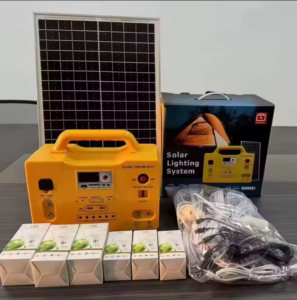
You invested in a solar system expecting it to reduce your electricity bills, keep your appliances running, and provide reliable backup power. But now you are looking at the inverter display and wondering: “Why is my solar system not producing enough power?”
Perhaps your solar panels are rated at 5kW, but the inverter rarely shows 5kW. Maybe your batteries are not fully charging, your system performs well in the morning but poorly later in the day, or your solar production has gradually declined.
The good news is that low solar power output does not automatically mean your solar panels are faulty. Solar production naturally changes throughout the day and is affected by sunlight intensity, panel temperature, shading, dirt, orientation, wiring, inverter limitations, battery condition, and system sizing.
In Kenya, where solar resources are generally strong—with research estimating average solar irradiation of roughly 4.5–6 kWh/m²/day nationwide—persistent underperformance warrants investigation.
Quick Answer: Why Is My Solar System Producing Less Power?
Before getting into technical details, here’s the short answer: your solar system may be producing less power because the panels are shaded or dirty, sunlight conditions are poor, the panels are too hot, the installation is incorrectly oriented, there are electrical losses, the inverter is limiting production, the battery is not accepting charge, or the system is simply too small for your energy requirements.
A solar panel’s advertised wattage is its rated output under standard test conditions, not a guaranteed amount of power it will produce every hour. PV modeling tools account for losses from factors including soiling, shading, wiring, connections, mismatch, system availability, and other effects.
So if you have a 5kW solar array, seeing something below 5kW at a particular moment does not necessarily indicate a fault.
The important question is: Is your system performing normally for the available sunlight and installation conditions, or is something unnecessarily reducing its output?
How Much Power Should Your Solar Panels Produce?
Understanding expected solar production is the first step in diagnosing a solar system that isn’t producing enough power. Without knowing what your system should realistically produce, it is easy to mistake normal fluctuations for a technical problem.
Solar panels are normally rated under Standard Test Conditions (STC), which use specific laboratory conditions including 1,000 W/m² irradiance and a 25°C cell temperature. Real installations rarely operate under those exact conditions.
This means a panel labeled 550W will not necessarily produce 550W continuously.
Production changes according to:
- Solar irradiance
- Time of day
- Panel temperature
- Cloud cover
- Shading
- Panel orientation
- Panel tilt
- Dirt and dust
- Wiring losses
- Inverter efficiency
- Panel age
- System configuration
Therefore, a temporary reduction in output is normal. A persistent or dramatic reduction, however, deserves investigation.
1. Your Solar Panels Are Dirty or Dusty
One of the simplest causes of low solar panel output is also one of the easiest to overlook: dirt.
Dust, pollen, bird droppings, and other debris can accumulate on the panel surface and prevent some sunlight from reaching the photovoltaic cells.
This is particularly relevant in dusty environments or during periods with little rain.
How to Fix Dirty Solar Panels
If the panels are safely accessible:
- Inspect them visually.
- Look for dust, mud, bird droppings, and debris.
- Clean them using the appropriate methods recommended by the panel manufacturer.
- Avoid abrasive materials that can damage the glass.
- Check whether production improves afterward.
Do not climb onto a roof or handle electrical equipment simply to clean panels if doing so creates a fall or electrical hazard.
2. Trees, Buildings, or Other Objects Are Shading the Panels
Shading is another major reason solar panels are not producing enough power.
A tree may have been small when the system was installed, but could now be casting shadows across the array. Similarly, a new building, water tank, wall, or neighboring structure can alter the amount of sunlight reaching the panels.
Why Partial Shading Matters
Solar panels are electrically interconnected. Depending on the array configuration and equipment used, shading on part of the system can affect the output of a larger portion of the array.
If your solar production falls at a predictable time every day, observe the panels around that period.
For example:
- Strong output in the early morning
- Significant drop around midday
- Output improves later
could indicate changing shade patterns.
Solution
Have the installation assessed for shading throughout the day rather than checking it at only one time.
If trees are responsible, carefully consider trimming or relocating them. If the issue is caused by building orientation or array placement, a solar professional can determine whether repositioning the panels or changing the system configuration is worthwhile.
3. High Panel Temperature Is Reducing Output
It seems logical to assume that more heat means more solar electricity, but photovoltaic modules actually lose power as their operating temperature rises.
This means a panel can receive intense sunlight while producing less power than its laboratory-rated output because its cells are significantly hotter.
What Can You Do?
Good installation practices can help.
Solar panels should have appropriate mounting and ventilation rather than being installed in a way that unnecessarily traps heat.
This is one reason professional solar installation matters. Panel placement isn’t simply about putting as many modules as possible onto a roof.
4. Cloudy Weather Is Reducing Solar Production
Another common misconception is that solar panels should produce the same amount of electricity whenever it is daytime.
They don’t.
Solar PV systems respond to available sunlight. Cloud cover reduces the solar irradiance reaching the panels so that production can fall substantially.
Solar panels can still generate electricity on cloudy days because diffuse sunlight reaches the modules, but output is normally lower than under stronger sunlight.
Therefore, don’t compare production on a heavily overcast day with production on a clear day and assume your panels have failed.
Instead, compare performance under similar weather and sunlight conditions.
5. The Panels Are Not Correctly Oriented or Tilted
Even high-quality solar panels can underperform if they are installed in a position that doesn’t provide good solar exposure.
The array’s:
- Direction
- Tilt
- Roof angle
- Shading exposure
- Row spacing
can influence the amount of sunlight available to the modules.
The Solution
If you suspect poor positioning, don’t immediately move the panels yourself.
A qualified solar technician can assess the array’s orientation, tilt, and shading pattern and determine whether repositioning would provide enough additional energy to justify the work.
6. Your Inverter Is Limiting Solar Output
Sometimes the solar panels are producing plenty of DC electricity, but the inverter cannot deliver all of it as AC power.
This can happen when the PV array is larger than the inverter’s usable power capacity.
For example, a system might have a relatively large DC solar array paired with an inverter whose AC output rating is lower. During periods of strong sunlight, the array may be capable of generating more power than the inverter can convert and deliver.
This phenomenon is commonly referred to as inverter clipping.
What to Check
Look at the inverter display or monitoring application and compare:
- PV input power
- Inverter output power
- PV voltage
- PV current
- Inverter rated output
If the inverter repeatedly reaches its maximum output during strong sunlight, this may be normal system behavior rather than a faulty panel.
7. There Is a Wiring or Connection Problem
Electrical losses can also contribute to low solar power output.
PV systems contain multiple electrical connections, cables, isolators, and protection devices. Poor connections, damaged cables, or inappropriate cable sizing can introduce additional losses.
Warning Signs
A technician should investigate if you notice:
- Unexpectedly low PV voltage
- Unusual voltage differences between strings
- Fault messages
- Damaged cables
- Loose or visibly damaged connectors
- Intermittent solar production
- One section of the array produces substantially less than the others
Do not open live PV equipment or disconnect high-voltage DC connections yourself. Solar DC circuits can remain dangerous even when the inverter is switched off.
8. One or More Solar Panels May Have a Fault
If one panel or string develops a problem, the entire system’s output can fall.
Possible causes include:
- Damaged module
- Failed bypass diode
- Internal electrical fault
- Physical damage
- Connector failure
- Water ingress
- Manufacturing defect
A visual inspection can reveal obvious damage, but many electrical faults require proper testing equipment.
If production suddenly drops and remains low even under clear sunlight, professional testing is advisable.
9. Your Solar Battery Is Not Charging Properly
Sometimes customers say their solar system isn’t producing enough power when the panels are actually producing electricity, but the battery isn’t storing it correctly.
This creates an important distinction:
Solar production problem: The panels aren’t generating enough electricity.
Battery problem: The system generates electricity, but the battery cannot accept, store, or deliver the expected amount.
Battery-related problems can include:
- Battery degradation
- Incorrect charging settings
- Battery temperature issues
- BMS protection
- Low battery state of charge
- Faulty battery connections
- Incompatible inverter settings
If your inverter shows healthy PV generation while the battery remains unable to charge normally, the battery side of the system should be investigated.
10. Your Solar System Is Too Small for Your Current Energy Demand
This is one of the most important causes because not every low-power problem is a technical fault.
Perhaps your household energy consumption has increased since the system was installed.
You may have added:
- Air conditioners
- Water heaters
- Fridges or freezers
- Pumps
- Washing machines
- Electric cookers
- More lighting
- Office equipment
- Entertainment systems
A system that was adequate two years ago may no longer meet your current demand.
The Solution
Create a list of your major appliances and their power ratings.
Then determine:
- How many watts do they consume
- How many hours do they operate
- Which appliances run simultaneously
- Your daily energy consumption
- Your peak power requirement
A qualified solar installer can then determine whether you need additional panels, a larger inverter, more battery storage, or a complete system upgrade.
How to Troubleshoot Low Solar Power Step by Step
If your solar system is producing low power, follow these steps before assuming that expensive components need replacement.
Step 1: Check the Weather
Was the day cloudy or rainy?
Compare your production with similar clear days.
Step 2: Inspect the Panels
Look for:
- Dust
- Bird droppings
- Leaves
- Debris
- Visible damage
Step 3: Check for Shadows
Look at the array during different parts of the day.
Trees and buildings may create temporary shading.
Step 4: Check the Inverter
Look for:
- Error codes
- Warning lights
- PV input
- Output power
- Battery status
- Historical production
Record unusual readings rather than repeatedly resetting the inverter.
Step 5: Compare Current Production With Historical Data
If your inverter has monitoring software, compare today’s output with previous days and months under similar weather conditions.
A gradual decline can tell a different story from a sudden drop.
Step 6: Check Your Energy Demand
Your system may be functioning correctly while your household simply consumes more electricity than before.
Step 7: Call a Qualified Technician
If the basic checks don’t explain the problem, professional testing can identify electrical, inverter, panel, and system-design issues.
When Should You Call a Solar Technician?
Knowing when not to DIY is an important part of solar system maintenance. PV systems can involve high DC voltages, batteries, and AC electrical circuits, so electrical troubleshooting should be treated seriously.
Call a qualified solar technician if:
- The inverter displays a persistent fault.
- Solar production suddenly drops significantly.
- A panel or cable appears damaged.
- PV voltage or current readings look abnormal.
- One string performs differently from the others.
- The inverter repeatedly shuts down.
- The battery isn’t charging correctly.
- You suspect an electrical connection problem.
- You want to add more solar panels.
- You need to upgrade your inverter.
- You want to expand battery storage.
- Your system consistently underperforms despite good sunlight.
Common Mistakes That Reduce Solar System Performance
Many solar problems are made worse because homeowners try to fix symptoms instead of identifying the underlying cause.
Mistake 1: Expecting Rated Wattage All Day
A 550W panel is not designed to produce exactly 550W continuously.
Mistake 2: Blaming the Panels Immediately
The inverter, battery, wiring, shading, or system sizing could be responsible.
Mistake 3: Ignoring Dirt
Dust and other soiling can reduce the sunlight reaching PV cells.
Mistake 4: Ignoring Shading
Even relatively small shadows can affect production depending on the array configuration.
Mistake 5: Adding Panels Without Checking the Inverter
An additional PV array must be electrically compatible with the inverter’s voltage, current, and input limits.
Mistake 6: Replacing the Battery When the Panels Are the Problem
Always determine whether the problem is generation or storage before buying replacement equipment.
Mistake 7: Opening the Inverter Yourself
High-voltage electrical equipment should be inspected and repaired by appropriately qualified personnel.
Frequently Asked Questions About Low Solar Power
These are some of the questions homeowners commonly ask when their solar system appears to be underperforming.
Why is my solar system not producing enough power?
Common causes include shading, dirty panels, cloud cover, high panel temperature, poor orientation, electrical losses, inverter limitations, panel faults, battery problems, and an undersized system.
1. Why are my solar panels producing less power than expected?
The panel’s rated wattage represents performance under standardized test conditions. Actual output varies with sunlight, temperature, shading, soiling, orientation, wiring, and other system losses.
2. Can dirty solar panels reduce power output?
Yes. Dirt and other material on the module surface reduce the solar radiation reaching the cells and can therefore reduce production.
3. Does shade affect solar panel output?
Yes. Trees, buildings, roof structures, and other objects can reduce the sunlight reaching the array and therefore reduce energy production.
4 .Do solar panels produce less power when they get hot?
Yes. PV module power generally decreases as cell temperature rises, all else being equal.
5. Why is my solar battery not fully charging?
Possible causes include insufficient PV production, high household loads, incorrect charging settings, battery degradation, battery protection behavior, or a problem with the inverter-battery configuration.
6. Can an inverter limit solar production?
Yes. If the solar array can produce more DC power than the inverter can convert at that moment, the inverter may limit the output.
7 . Should I add more solar panels?
Only after determining why your current system is underperforming. If the existing panels are dirty, shaded, or affected by an electrical fault, adding more panels may not solve the underlying problem.
8. How can I improve my solar system’s performance?
Start with panel cleaning, shading assessment, inverter monitoring, and checking for obvious faults. If production remains below expectations, have the complete system professionally assessed.
Final Thoughts: Don’t Assume Your Solar Panels Are Faulty
When your solar system isn’t producing enough power, the problem isn’t always the solar panels.
Start with the basics: check sunlight, inspect the panels, look for shading, check the inverter, review your battery status, and compare current production with historical performance.
If those checks don’t explain the problem, the system may have an electrical fault, inverter limitation, installation issue, or insufficient capacity for your current energy consumption.
The most effective approach is to diagnose the complete system rather than replacing individual components based on guesswork.
Need Reliable Solar Solutions in Kenya?
If your existing system is consistently underperforming or you are planning a new solar installation, getting the right combination of solar panels, inverter, batteries, and system capacity is critical.
MK Homestyles provides solar products and power solutions for homes and businesses in Kenya, including solar panels, solar inverters, batteries, and related power equipment.
Whether you need to troubleshoot an existing installation, expand your solar capacity, or build a new system, MK Homestyles Kenya can help you identify a solution suited to your energy requirements.
Choose MK Homestyles Agencies Limited for dependable solar shop, power solutions, electricals, and smart-home products in Kenya.
If your solar system is producing less power than expected, don’t guess—identify the cause and choose the right solution with MK Homestyles.