-1771628551.png)
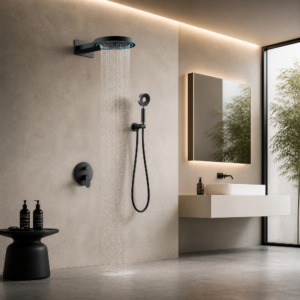
There is nothing more frustrating than turning on the shower expecting a strong, refreshing stream of water and getting little more than a weak trickle. If your shower has low water pressure, you may immediately assume that you need a new showerhead or a powerful water pump. But the real cause could be something much simpler—or it could indicate a problem with your home’s plumbing or water supply.
The good news is that low shower pressure is often fixable. If the problem affects only one shower, start by checking the showerhead, flow restrictor, valves, and shower cartridge. If pressure is low throughout the house, investigate the main water supply, pipes, pressure regulator, tank arrangement, or pump.
For Kenyan homes supplied by water tanks, another important factor is gravity pressure. A tank may provide enough water for basic household use but still fail to deliver the pressure required for a strong shower, particularly if it is not sufficiently elevated.
Is Your Shower the Only Fixture With Low Water Pressure?
Before buying anything, the fastest way to troubleshoot a low-pressure shower is to determine whether the problem is isolated to the shower or affects your entire home.
This simple test can narrow down the possible causes considerably and prevent you from spending money on the wrong solution.
If it’s only the shower that has low pressure
If your kitchen tap, bathroom basin, and other outlets have normal flow but the shower is weak, the problem is probably somewhere between the shower’s water connection and the showerhead.
Likely causes include:
- Clogged showerhead
- Mineral buildup
- Blocked showerhead filter
- Partially closed shower valve
- Faulty mixing cartridge
- Restrictive flow-control component
- Kinked or restricted shower hose
- Blocked shower supply pipe
A shower-only problem generally points toward a local fixture or branch-pipe issue rather than the home’s main water supply.
If Every Tap and Shower Has Low Pressure
If your entire house has weak water flow, don’t start by replacing the showerhead.
The problem could be:
- Low municipal supply pressure
- Low pressure from a storage tank
- A partially closed main valve
- Faulty pressure-control equipment
- Blocked or corroded pipes
- An undersized water supply system
- A failing water pump
This distinction is one of the most useful first steps when diagnosing low water pressure in a house.
1. Your Showerhead Is Clogged
One of the first things to check when your shower water pressure is low is the showerhead itself. Tiny spray openings can gradually become restricted by mineral deposits, dirt, and other particles.
This problem often develops gradually. You may notice that your shower used to have a strong water flow but has become weaker over several months.
How to Tell if the Showerhead Is Blocked
Look for:
- Uneven spray from the nozzles
- Water spraying sideways
- White or chalky deposits
- Some spray holes produce little or no water
- A gradual decline in shower pressure
Mineral deposits can restrict the small passages inside a showerhead, reducing water flow.
How to Clean a Clogged Showerhead
Start with this simple solution before considering more expensive repairs.
- Turn off the shower.
- Carefully remove the showerhead.
- Inspect the inlet and spray holes.
- Soak the showerhead in white vinegar or an appropriate descaling solution.
- Gently brush away loosened deposits.
- Rinse thoroughly.
- Reinstall the showerhead.
- Test the water flow.
If cleaning does not restore adequate flow, the showerhead may need to be replaced.
2. Check the Shower Flow Restrictor
Modern showerheads may include components designed to limit water flow. While water-saving designs can reduce consumption, they can feel particularly weak when the incoming water supply is already low.
This means the showerhead may not actually be defective—the combination of restricted flow and low incoming pressure may be unsuitable for your plumbing system.
Before modifying or removing any flow-control component, check the showerhead manufacturer’s instructions and local requirements. A better approach may be selecting a showerhead designed to perform well at the pressure available in your home.
3. A Water Supply Valve May Be Partially Closed
If your shower pressure suddenly became weak, think about what happened immediately before the problem appeared.
Was there:
- Plumbing maintenance?
- A water leak repair?
- Bathroom renovation?
- Shower replacement?
- Water tank maintenance?
- Pipe repair?
A valve that was not completely reopened after plumbing work can restrict water flow to the shower. This is a relatively simple cause that is easy to overlook.
What You Can Check
If the relevant valve is easily accessible, confirm that it is fully open.
Do not force a stuck valve. If you are unsure which valve controls the shower, or if accessing it requires opening walls or other plumbing infrastructure, contact a qualified plumber.
4. The Shower Mixing Valve or Cartridge May Be Faulty
If cleaning the showerhead doesn’t help, the restriction could be inside the shower valve.
The mixing valve or cartridge controls the flow and temperature of water entering the shower. Mineral deposits, wear, or internal damage can restrict water flow.
A useful clue is when:
- Both hot and cold flows are affected.
- The pressure changes as the temperature is adjusted.
- Water temperature fluctuates unexpectedly.
- The problem developed gradually.
- Other taps have normal pressure.
A worn or clogged cartridge can restrict flow even when the shower handle is fully open. Replacing the cartridge typically requires disassembling the shower valve and should be done in accordance with the manufacturer’s design.
5. Your Water Tank May Not Provide Enough Pressure
For many Kenyan homes, water is stored in an elevated tank and distributed around the house using gravity. This is convenient, but having a water tank does not automatically mean you will have strong shower pressure.
Water pressure from a gravity-fed system depends largely on the vertical difference between the water level in the tank and the shower outlet.
This is why a shower on an upper floor may sometimes experience weak flow if the tank arrangement does not provide enough pressure.
How to Improve Pressure From a Water Tank
If a tank supplies your shower, check:
- Tank position
- Tank water level
- Pipe size
- Pipe length
- Number of outlets operating simultaneously
- Shower location
- Condition of the supply pipe
If the system is correctly installed but the gravity pressure remains insufficient, a water pressure booster pump may be an appropriate solution.
However, the pump should be selected based on the plumbing layout, required pressure, and water demand, rather than simply choosing the largest available motor.
6. Your Home May Need a Water Pressure Booster Pump
If the showerhead and plumbing fixtures are working correctly but the incoming water pressure is genuinely insufficient, a shower booster pump or domestic water booster pump can improve water flow.
This is particularly relevant where water is supplied from a tank and gravity alone does not provide sufficient pressure.
A properly selected booster pump can help improve:
- Shower pressure
- Tap flow
- Water flows to multiple outlets
- Water supply from storage tanks
- Performance of certain water-using appliances
However, installing a booster pump should follow the diagnosis of the underlying problem. A pump will not fix a clogged showerhead, a blocked pipe, or a faulty valve.
7. Your Pipes May Be Restricted
Sometimes the showerhead is perfectly clean, but water is being restricted before it reaches the bathroom.
Pipe problems can result from:
- Sediment
- Mineral deposits
- Corrosion
- Undersized pipes
- Damaged pipes
- Partially blocked lines
- Excessively long pipe runs
Older metal plumbing can gradually become restricted internally as corrosion reduces the available passage for water.
If pressure is consistently low at one bathroom but normal elsewhere, the branch pipe serving that bathroom deserves attention.
8. Low Main Water Pressure Could Be the Problem
If multiple fixtures throughout your home have weak water flow, investigate the incoming supply.
Your local water supply may sometimes experience pressure fluctuations, or your property’s plumbing may have equipment that is limiting pressure.
A useful diagnostic test is to compare the flow at several fixtures simultaneously.
If the kitchen tap, basin, toilet supply, and shower are all affected, the problem is probably not the showerhead.
Whole-house, the main supply, pressure-control equipment, valves, or restricted plumbing can cause low pressure.
9. Check Whether the Problem Is Only With Hot Water
Does your cold shower pressure seem normal while hot water comes out weak?
If so, don’t immediately blame the showerhead.
The problem may be associated with:
- Water heater supply valve
- Hot-water pipe
- Shower mixing cartridge
- Water heater restriction
- Sediment or mineral buildup
- Hot-water system configuration
Comparing hot and cold flow is, therefore, a useful diagnostic step.
If only the hot side is affected, a qualified plumber or technician can inspect the hot-water system rather than replacing the entire shower.
Simple Step-by-Step Guide to Fix Low Shower Pressure
Now that you understand the possible causes, use this troubleshooting sequence. Starting with the simplest checks can save you unnecessary repair costs.
Step 1: Check Other Taps
Turn on nearby taps.
If everything else flows well, focus on the shower.
Step 2: Inspect the Showerhead
Look for mineral deposits, blocked nozzles, or debris.
Step 3: Test Without the Showerhead
If practical, briefly test the water flow with the showerhead removed.
If water flows strongly from the pipe but weakly through the showerhead, the showerhead is likely restricting flow.
Step 4: Check Accessible Valves
Confirm that relevant water valves are fully open.
Do not force valves that are stuck.
Step 5: Check Hot and Cold Separately
Determine whether the problem affects:
- Hot water only
- Cold water only
- Both
This can help identify whether the issue is related to the water heater or the mixing valve.
Step 6: Check Your Tank
If your home uses a storage tank, check the water level and consider whether the tank provides enough elevation for the shower.
Step 7: Check Other Fixtures Again
If pressure is low throughout the home, investigate the main water supply, plumbing, and pump system.
Step 8: Consider a Booster Pump
Only after confirming that the underlying plumbing is suitable should you consider a water pressure booster pump.
When Should You Call a Qualified Technician?
Not every shower pressure problem is suitable for DIY repair. If the basic checks don’t solve the problem, a professional diagnosis can prevent further damage.
Call a qualified plumber or technician if:
- Pressure suddenly drops throughout the house.
- You hear water running inside the walls.
- You see damp patches or unexplained water stains.
- A pipe may be leaking.
- The shower cartridge needs replacement.
- Internal plumbing needs modification.
- A water booster pump needs installation.
- Electrical work is required around a pump or water heater.
- The problem continues after cleaning the showerhead.
- Water pressure fluctuates severely.
- You need a new tank or pump system designed.
A sudden pressure drop accompanied by signs of a concealed leak deserves particular attention rather than simply installing a stronger pump.
Common Mistakes to Avoid When Fixing Low Shower Pressure
Before spending money on new equipment, avoid these common mistakes. They can make the problem more expensive or fail to address the actual cause.
Mistake 1: Buying a Pump Immediately
A booster pump won’t solve a clogged showerhead or damaged cartridge.
Mistake 2: Choosing a Pump by HP Alone
A higher-horsepower pump is not automatically the correct pump. Flow, head, pipework, and water demand all matter.
Mistake 3: Ignoring the Showerhead
The showerhead is often the easiest component to inspect and clean.
Mistake 4: Ignoring Other Fixtures
Always determine whether the problem affects the entire house or just one shower.
Mistake 5: Forcing Valves or Connections
A stuck valve can be damaged if excessive force is applied.
Mistake 6: Removing Components Without Understanding Them
Shower cartridges, flow-control components, and water-heating equipment can be model-specific. Follow manufacturer instructions or seek professional help.
Frequently Asked Questions About Low Shower Water Pressure
These questions cover some of the most common searches homeowners make when trying to diagnose low water pressure in their shower.
Why does my shower have low water pressure?
Common causes include a clogged showerhead, a partially closed valve, a faulty shower cartridge, a restricted pipe, low household water pressure, or inadequate pressure from a storage tank.
Why is my shower pressure suddenly low?
A sudden change can indicate a partially closed valve, a blocked showerhead, a plumbing problem, a pump issue, or a change in the water supply. If the pressure drops throughout the house, investigate the wider water system.
How can I increase water pressure in my shower?
Start by cleaning the showerhead and checking accessible valves. If a low-pressure tank or water supply supplies the shower, a correctly sized booster pump may improve flow after the rest of the system has been checked.
Can a clogged showerhead cause low water pressure?
Yes. Mineral deposits and debris can block the small openings in the showerhead, restricting water flow. Cleaning or replacing the showerhead can restore performance.
Do I need a water pump for my shower?
Not necessarily. If the showerhead is blocked or a valve is restricted, a pump isn’t required. A booster pump may be appropriate when the underlying water supply genuinely lacks sufficient pressure.
What is the best water pump for a shower?
There is no single best pump for every home. The appropriate pump depends on the water source, pipe size, required flow and pressure, number of outlets, and building layout.
Why is my shower pressure low, but my taps are fine?
If other taps have normal pressure, the problem is probably local to the shower. Start with the showerhead, hose, valves, and mixing cartridge.
Final Thoughts: Fix the Cause, Not Just the Symptom
When your shower has low water pressure, don’t immediately assume that you need a powerful pump. Start with the simplest diagnosis: is the problem only in the shower, or is water pressure low throughout the house?
If it’s only the shower, inspect the showerhead, clean any mineral buildup, check the valves, and investigate the shower cartridge. If the entire home has low pressure, check the water supply, tank arrangement, pipes, and pumping system.
For homes where gravity-fed water from a tank doesn’t provide enough pressure, a properly selected water pressure booster pump can be an effective solution. The key is to choose the pump according to the actual requirements of the plumbing system.
Need a Water Pressure Solution in Kenya?
If you’re looking for a water pressure booster pump, domestic water pump, shower solution, or other plumbing and electrical products in Kenya, MK Homestyles can help you identify the appropriate solution for your application.
For homeowners experiencing weak showers, low tank pressure, or inconsistent water flow, MK Homestyles offers water-pumping solutions, including the Pulsar QB60 0.5 HP booster pump, as well as other products designed for domestic water supply and pressure-boosting applications.
Don’t just live with a weak shower. Diagnose the cause, choose the right solution, and get reliable water pressure for your home with MK Homestyles.